What is nasi padang?
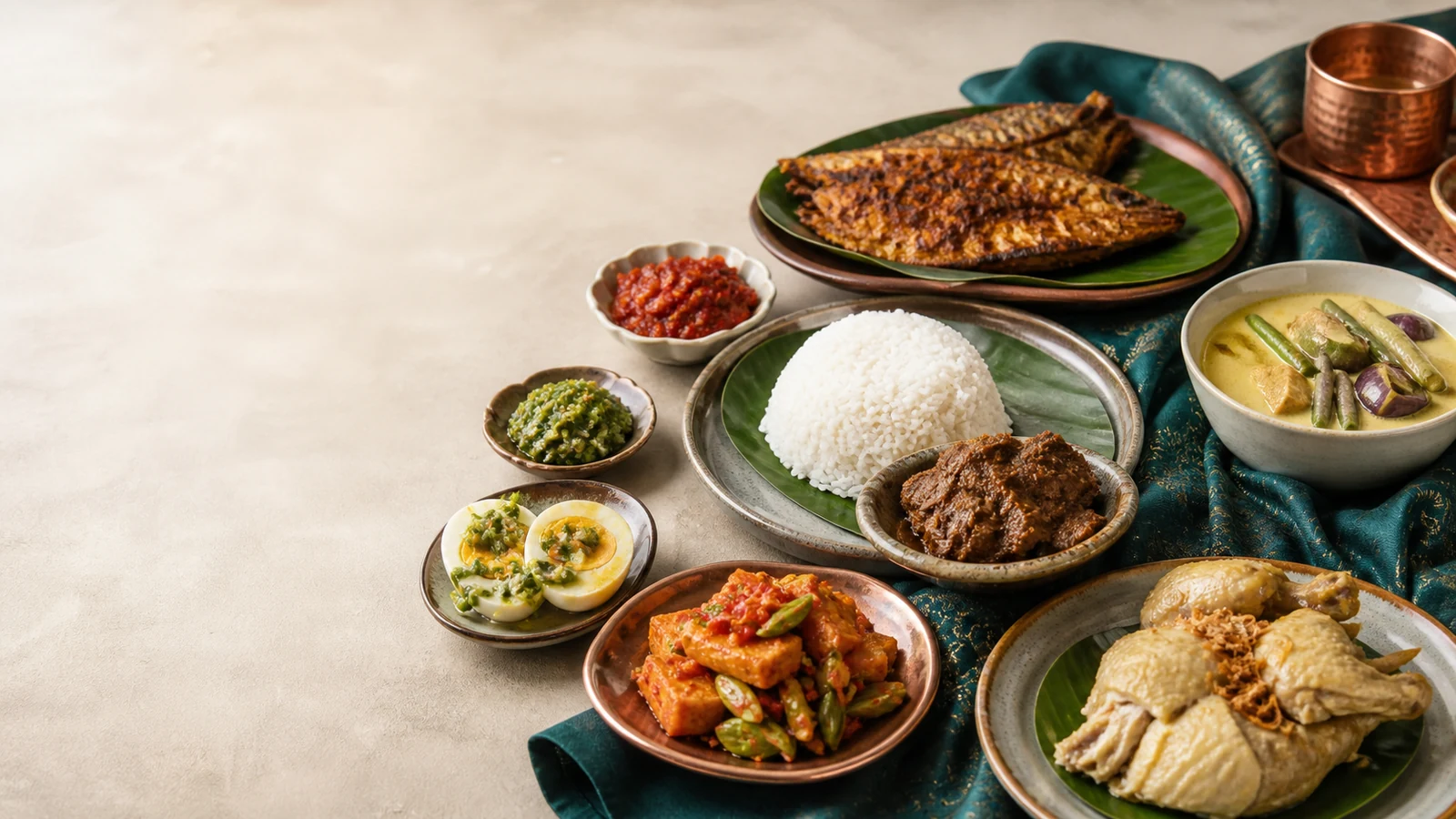
Nasi padang is a style of eating that comes from the Padang region of West Sumatra, home to the Minangkabau people. The name literally means "Padang rice": a plate of steamed rice paired with a spread of pre-cooked dishes laid out at the counter. You choose what you want by pointing, and the server piles it onto the rice or serves it in small dishes on the side.
The cuisine is known for deep, slow-cooked curries and bold sambals. Coconut milk, chilli, turmeric, lemongrass and galangal do most of the heavy lifting, which is why a good nasi padang counter smells of spice long before you reach it.
- Minangkabau (West Sumatran) in origin, now a Singapore staple
- Steamed rice plus a pick-and-mix of curries, grilled meats and vegetables
- You point at what you want — no menu needed
Is nasi padang halal?
Nasi padang is a Malay-Indonesian cuisine, and in Singapore many stalls are Muslim-run, so the food itself is usually pork-free and alcohol-free by default. That said, "usually" is not the same as "confirmed" — the only way to be sure is to check the individual stall.
Look for the MUIS halal certificate on display, or a clear Muslim-Owned label. A plain "no pork, no lard" sign is helpful but is not the same as certification. If you can't see either, it's fair to ask the stallholder, or check current certification on the MUIS HalalSG register before you go.
- Most nasi padang in Singapore is Muslim-run and pork-free
- Look for the MUIS certificate or a Muslim-Owned label to be sure
- Treat 'no pork, no lard' as helpful but not equivalent to certification
One useful guide to halal food and Muslim life in Singapore, free every Friday.
The classic dishes to know
Part of the fun is recognising what's on the counter. You don't need to speak Indonesian — just learn a handful of names and you'll order like a regular.
- Rendang — beef simmered for hours in spiced coconut milk until dark and tender
- Ayam bakar / ayam goreng — grilled or fried chicken, often with a sweet-spicy glaze
- Sambal goreng — a spicy stir-fry of tempeh, tofu, long beans and sometimes liver
- Sayur lodeh — vegetables in a mild coconut gravy
- Telur balado / begedil — egg in chilli sambal, and potato-beef cutlets
- Ikan / sotong sambal — fish or squid in a rich chilli paste
How to order like a regular
At a nasi padang counter you start with rice, then point at the dishes you want. Prices are usually worked out from what you pick, so a plate of rice with a couple of items is an everyday meal, while a heavier spread of rendang, fish and several sides costs more. Don't over-order on your first visit — the curries are rich, and a little goes a long way.
Ask for extra sambal or gravy if you like heat; most stalls are generous with both. If you're eating as a group, order a shared spread and a plate of rice each so everyone can try more.
- Start with rice, then point at the dishes you want
- You're charged by what you pick, so pace yourself
- Ask for extra gravy or sambal — it's usually free-flow
Where to find nasi padang in Singapore
Nasi padang turns up in hawker centres, coffee shops and food courts all over the island, with well-known clusters around the Malay-Muslim heartlands and in the CBD at lunch. Look for local nasi padang and Malay-Indonesian outlets, then check each one's current certification or ask the stallholder about its Muslim-Owned status before you go.