Where to buy halal meat in Singapore
The useful choice is between a specialist butcher, an online meat service and a supermarket. The Meatery describes itself as a Muslim-owned gourmet butchery curating halal-certified prime meats from several countries. Adam's Meat states that it is MUIS-certified and offers same-day delivery for orders placed before its cut-off. CS Foods runs an online and physical halal butchery with retail and wholesale products. The Meat Club maintains a halal collection with one-time and subscription delivery.
Each solves a different need. A specialist is useful for advice, unusual cuts and exact portioning. An online service helps with planned freezer restocks. Supermarkets are convenient for everyday chicken, mince and frozen items. Do not treat this as a permanent ranking: search the current seller, product label and certification evidence before ordering. Imported meat may be certified by a MUIS-recognised foreign body, while local processing or marination can carry its own facility-level requirements.
- Specialist butcher: advice, custom cuts and premium range
- Online delivery: planned restocks and bundle comparison
- Supermarket: accessible everyday cuts
- Wholesale supplier: larger volume and business requirements
How to verify halal meat and a butcher
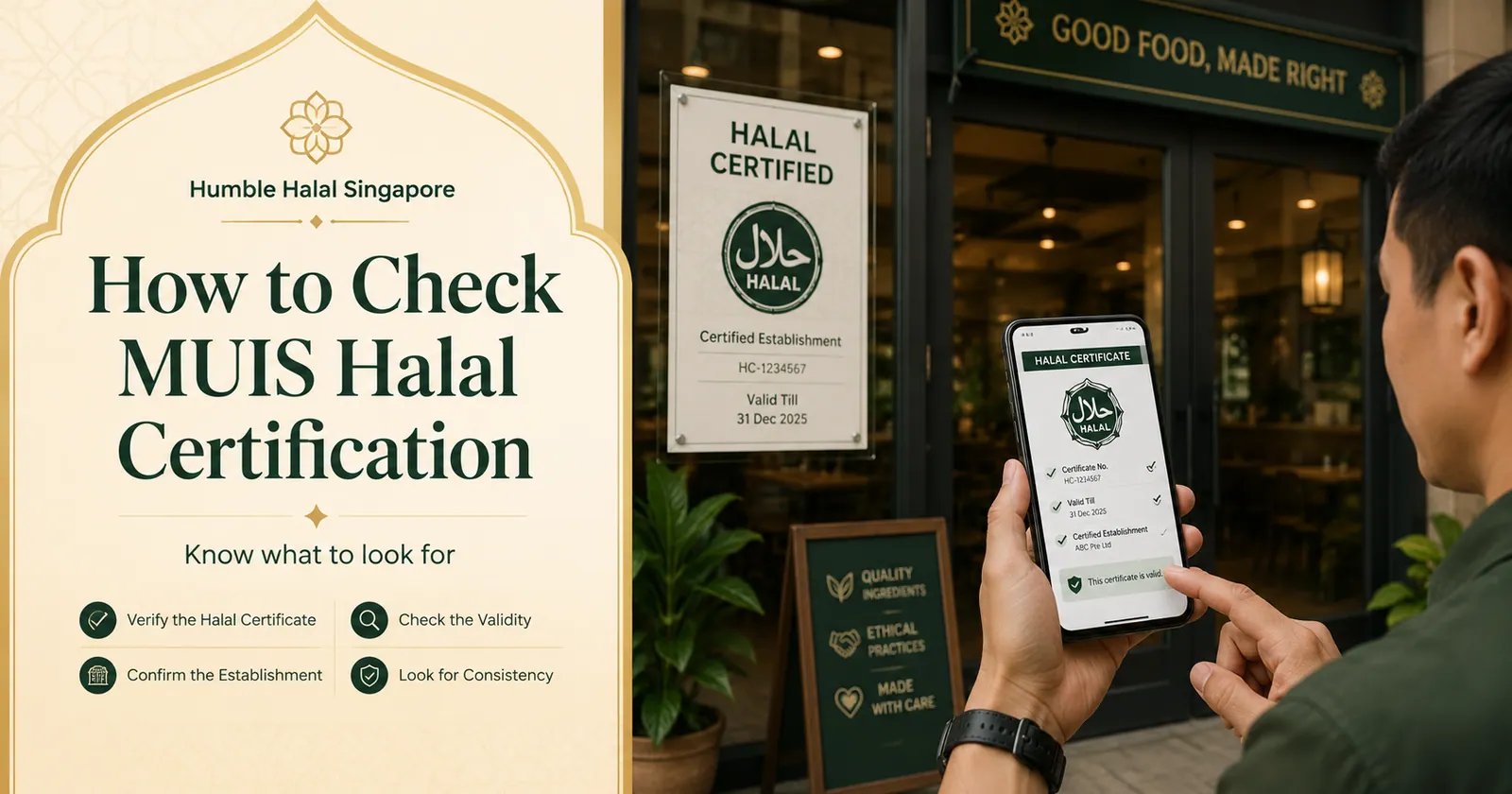
Read the label on the exact pack. Look for the certifying body, country of origin, establishment details and any halal mark. For local premises, search the current MUIS directory. For imported meat, MUIS recognises foreign halal certification bodies rather than certifying every overseas plant itself. The importer or retailer should be able to identify the source and evidence for the product it sells.
Processing changes the question. Plain sealed beef imported with recognised certification is different from meat minced, marinated, smoked or repacked in Singapore. Ask where that work happens and whether the relevant facility and ingredients are covered. A Muslim-owned butcher may curate certified products, but ownership should not be rewritten as a premises certificate unless that is what current MUIS evidence shows. Choose the narrowest accurate description.
- Exact product label and certifying body
- Country, plant or facility information
- Local processing, mincing or marination scope
- Current premises record where applicable
Buy the cut your recipe needs, then verify the exact product and processing—not just the word halal in a shop headline.
The right beef cut for steak, stew and barbecue
Ribeye has rich marbling and suits fast, high-heat cooking. Sirloin balances tenderness and price. Tenderloin is very tender but leaner in flavour. Picanha carries a fat cap that works well over a grill, while flank, skirt and hanger reward quick cooking and slicing across the grain. Brisket and short rib need time; their connective tissue softens through slow braising or barbecue.
Buy for the method rather than prestige. An expensive steak cut becomes a poor stew, and a tough working muscle can be exceptional when cooked slowly. Tell the butcher the dish, equipment, number of diners and desired portion. Ask for consistent thickness when cooking several steaks together. For stir-fry, request thin slicing across the grain; for rendang, cubes with enough connective tissue and fat stay succulent through long cooking.
- Ribeye or sirloin: pan-seared or grilled steak
- Picanha, flank or skirt: barbecue and quick grilling
- Brisket and short rib: smoke or slow braise
- Chuck: curry, rendang and stew
- Mince: burgers, meatballs and sauces
Choosing lamb, mutton, goat and chicken
Lamb is younger and usually milder; mutton has a deeper flavour and suits slow, spiced dishes. Goat is lean and benefits from braising, curry or low-and-slow roasting. Lamb shoulder gives forgiving richness, while leg is leaner and good for roasting or cubes. Chops cook quickly but cost more per edible portion because of bone.
For chicken, thigh remains juicy in curry, grilling and meal prep; breast is leaner but less forgiving. A whole chicken gives the best flexibility when you can break it down and use the bones for stock. Ask whether weights are gross or net of trimming and bone. For a family budget, combine one premium cut for a special meal with versatile mince, chicken thigh and braising cuts for the week.
- Lamb shoulder: roast, braise and curry
- Goat or mutton: slow cooking and bold spice
- Chicken thigh: juicy, versatile and meal-prep friendly
- Chicken breast: quick cooking with careful temperature control
One useful guide to halal food and Muslim life in Singapore, free every Friday.
Fresh, chilled or frozen halal meat
"Fresh" is often used loosely. Chilled meat is kept cold without being frozen; frozen meat is brought below freezing for longer storage. Neither is inherently better for every use. Properly frozen meat can deliver excellent quality and less waste, especially for slow-cooked dishes. Chilled steak offers convenience when you plan to cook soon and want to inspect marbling directly.
Check pack integrity, use-by date, storage instructions and the temperature at delivery. Vacuum-packed meat can have a darker colour and a brief confined odour that dissipates after opening; a persistent unpleasant smell, swollen pack or broken seal is different. Refrigerate promptly and follow Singapore Food Agency advice. When in doubt about a compromised delivery, photograph it and contact the seller before cooking.
- Chilled: convenient for near-term cooking
- Frozen: longer storage and useful portion control
- Inspect seal, label, date and delivery temperature
- Reject swollen, leaking or suspicious packs
Halal meat delivery: compare the final service
Same-day claims have a cut-off, postal-code scope and stock condition. Adam's Meat currently advertises same-day delivery for orders before noon, while other sellers offer next-day, scheduled or subscription slots. Confirm the live checkout rather than planning around a search snippet. Compare minimum spend, delivery fee, frozen or chilled handling, order changes and what happens when nobody can receive the box.
Choose a window when the meat can go straight into a fridge or freezer. A guardhouse or office reception is not long-term cold storage. Ask the recipient to inspect the carton, count packs and photograph problems before removing labels. If several cuts arrive in one frozen block when you expected individual portions, contact the seller before thawing everything; refreezing after unsafe or extended thawing is not a good fix.
- Order cut-off and postal-code eligibility
- Minimum spend, fee and subscription terms
- Chilled or frozen transport
- Reachable recipient and immediate cold storage
How much halal meat to buy
Portion depends on bone, fat, cooking loss and the rest of the meal. As a rough planning range, allow a smaller raw portion when meat is one component among rice, vegetables and sides, and more when steak is the centre of the plate. Bone-in cuts require extra weight. Ask the butcher for yield rather than relying on a single universal number.
For meal prep, portion before freezing. Label the cut, weight and date, then freeze flat where practical. This prevents thawing a kilogram for a two-person dinner. A mixed box can be good value only if you know how to cook every item; mystery cuts that sit unused are expensive regardless of discount. Build a shopping list from actual meals, not the excitement of a bulk promotion.
- Account for bone and trimming
- Match quantity to sides and number of diners
- Portion and label before freezing
- Buy bundles only when every cut has a plan
Storage, thawing and food safety
Refrigerate chilled meat promptly and keep raw packs separate from ready-to-eat food. Thaw frozen meat in the refrigerator, in a sealed bag under controlled cold water, or according to safe appliance guidance—not for hours on a kitchen counter. Use separate boards and utensils, wash hands thoroughly and clean surfaces after raw-meat preparation.
Cook to a safe internal temperature suitable for the cut and diner. A meat thermometer is more reliable than colour alone, especially for poultry, mince and thick roasts. Cool leftovers promptly in shallow containers and reheat thoroughly. These practices are part of buying well: premium halal meat loses its value if the cold chain or kitchen handling is careless.
- Keep raw meat cold and separated
- Thaw safely, preferably in the refrigerator
- Use a thermometer for dependable doneness
- Cool and store leftovers promptly
A 10-minute halal butcher plan
Write the dishes and diner count. Convert each dish into a cut and weight. Shortlist two sellers, verify the exact product or facility evidence, and compare total delivered price. Choose a slot when someone can receive the order. On arrival, check labels, seals, count and temperature, then portion and store.
For a first order, avoid a huge box. Buy one familiar cut, one value braising cut and one small experiment. Note quality, packing and delivery accuracy. A dependable butcher relationship grows from repeat evidence, not one dramatic discount. Save the source and label details so future restocks take minutes.