Where to eat halal Peranakan food in Singapore
Tombok Tombok is the strongest current starting point for a focused halal Peranakan meal. Its official website labels the restaurant halal-certified and places it at 670 Bedok North Street 3, #01-02 Kaki Bukit Community Club. The menu centres Peranakan family recipes rather than adding one token Nyonya dish to a broad international list. That makes it useful for learning how ayam buah keluak, kari kapitan, itek sioh, achar and sambal work together at one table.
Treat the mention as a dated, editorially selected example, not a permanent certificate or sponsored rank. Search the exact premises in the current MUIS directory before travelling. Other hotels and restaurants may describe a halal-certified food preparation area while serving alcohol elsewhere; scope can be complex. Humble Halal favours the clearest evidence and explains any limitation rather than turning a broad venue claim into false certainty.
- Focused Peranakan menu at Kaki Bukit Community Club
- Official site currently displays a halal-certified label
- Online ordering, delivery and table-reservation paths are available
- Recheck the exact premises and today's hours before visiting
What is Peranakan food?
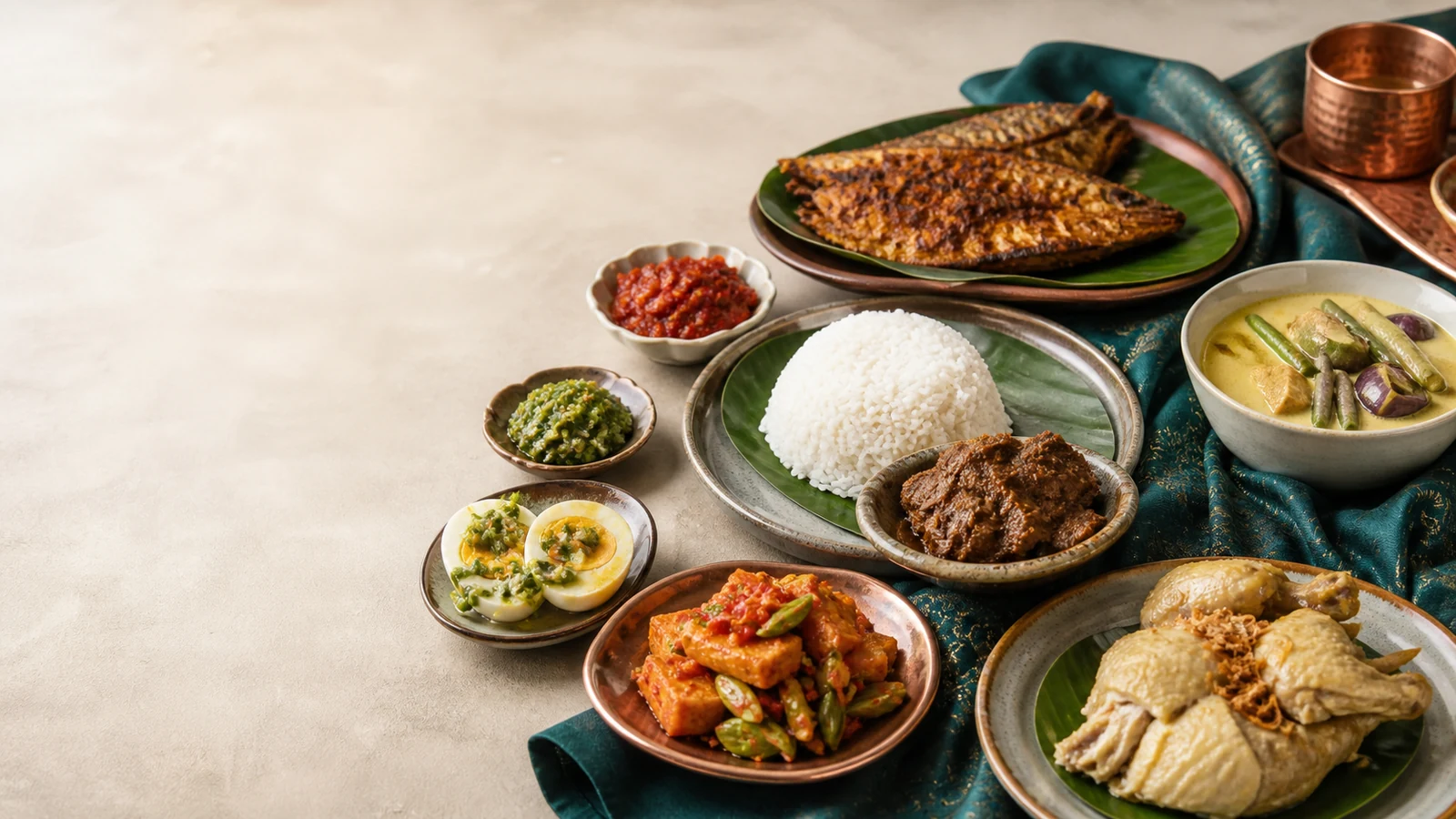
Peranakan cuisine grew from generations of exchange among Chinese, Malay and other communities across Singapore and the region. It is not one fixed recipe book. Family styles differ, and Penang, Melaka and Singapore traditions can emphasise different sour, spicy, herbal or coconut-rich notes. The table often combines slow braises, sambal, aromatic curries, pickles, seafood and rice, so the pleasure comes from contrast rather than one oversized main.
"Nyonya food" is often used for the cuisine, while "Peranakan" describes a broader cultural world. A useful first meal respects that depth without pretending a short guide settles every historical distinction. Order dishes from different flavour families, ask the restaurant about its chef or regional influences, and notice how rempah—the patiently prepared spice paste—builds the foundation. The food rewards sharing because one spoonful of a rich braise can be followed by sharp achar and fragrant rice.
- Rempah: spice paste forming the base of many dishes
- Belacan and sambal: savoury heat and fermented depth
- Coconut milk, tamarind and herbs: richness balanced by acidity
- Family-style sharing: several contrasting dishes with rice
A strong Peranakan order balances one rich braise with something sour, something fresh and enough rice to carry every sauce.
The essential dishes to order first
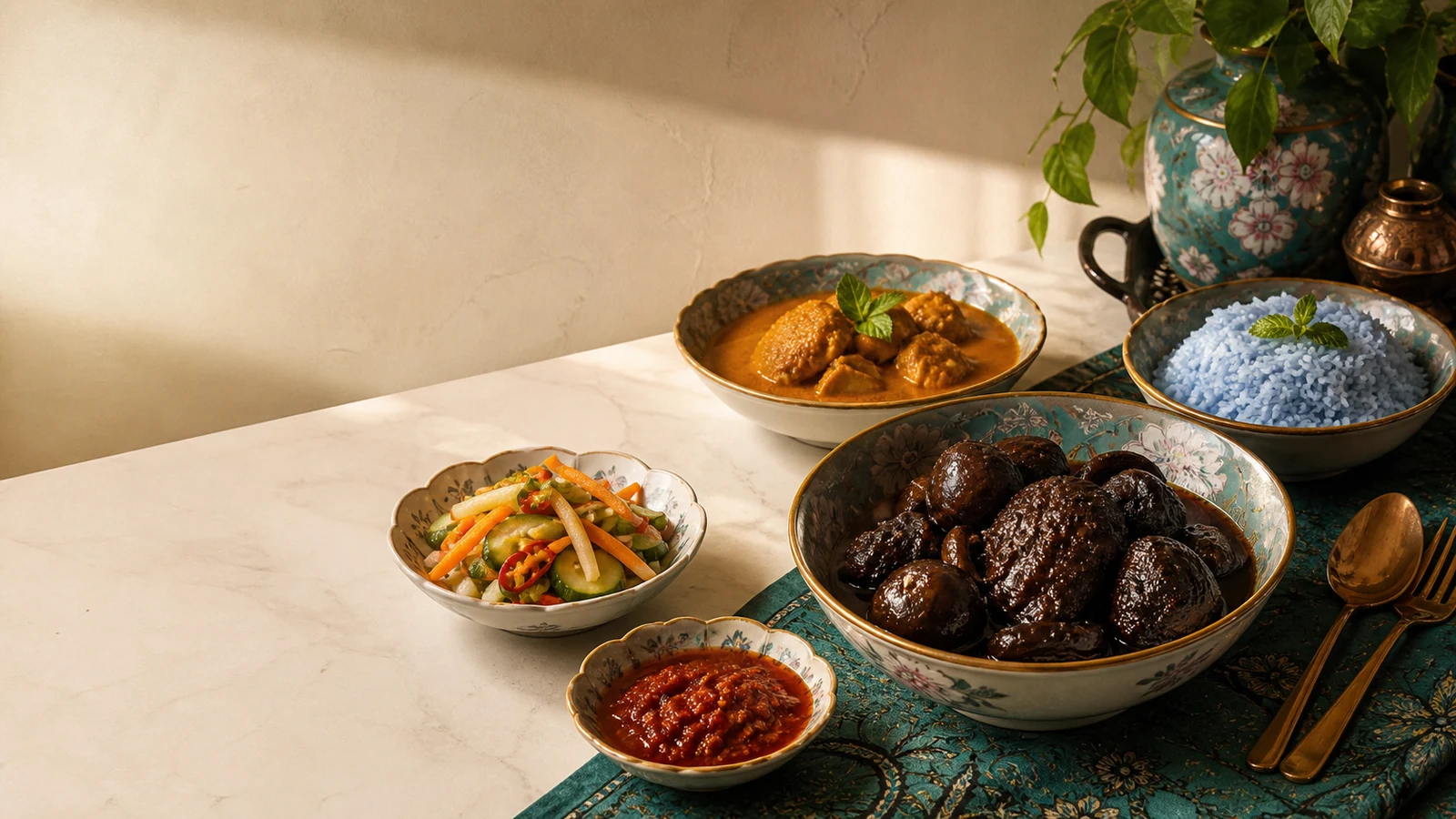
Ayam buah keluak is the dish many first-time diners remember. Chicken cooks in a dark, earthy sauce built around buah keluak nuts, producing a flavour that is difficult to compare with an ordinary curry. Kari kapitan is brighter and coconut-rich, with spice and aromatics around tender chicken. Itek sioh brings braised duck together with coriander and tamarind, offering a tangier profile. Tombok Tombok's current menu lists all three as individual sets and sharing dishes.
Add beef rendang for slow-cooked depth, a vegetable or achar for relief, and blue-pea coconut rice to carry the sauces. Seafood choices such as gulai tumis or sambal prawns add sourness and heat. A group of four does not need every signature. Choose one dark braise, one curry, one vegetable, one seafood dish and rice. That composition shows the cuisine's range while keeping the table coherent and the bill manageable.
- Ayam buah keluak: chicken in an earthy black-nut sauce
- Kari kapitan: aromatic Nyonya chicken curry
- Itek sioh: duck braised with coriander and tamarind
- Gulai tumis: fish in a sour-spicy tamarind gravy
- Achar awak: pickled vegetables that reset the palate
Is Peranakan food naturally halal?
No. Peranakan food can contain pork, lard, non-halal meat, cooking alcohol or stock made from ingredients that are not suitable. Some traditional dishes are easy to adapt, but the cuisine name alone says nothing about the kitchen's sourcing and preparation. Even a seafood or vegetable dish may share equipment with non-halal food in an uncertified restaurant.
Choose the exact outlet using current evidence. MUIS certification is the clearest premises-level assurance in Singapore. Muslim ownership is useful information but is not the same as certification, and "no pork, no lard" only answers part of the question. When a hotel describes a certified food area while the wider venue serves alcohol, confirm the boundaries directly instead of making a venue-wide assumption. Humble Halal records the narrowest status the evidence supports.
- Pork or lard in traditional recipes
- Non-halal meat, stock or fermented sauces
- Cooking alcohol and shared preparation
- Certification scope at mixed-use hotels or venues
New MUIS-verified spots, mosque events & deals across Singapore — free, every week.
How to order for one, two or a family group
A set meal is best for one person because it gives a signature main, rice and accompaniments without forcing a large sharing order. Tombok Tombok currently lists set versions of kari kapitan, itek sioh, ayam buah keluak and beef rendang. Two diners can choose contrasting sets or share two mains with rice and a small vegetable. If both dishes are coconut-heavy, add achar rather than another rich curry.
For four to six people, family style makes more sense. Start with one chicken dish, one seafood or duck dish, one vegetable, achar and rice. Ask how many each plate serves because restaurant portions vary. Children may prefer kari kapitan or rendang to the unusual depth of buah keluak, so keep sambal on the side and include one familiar option. Book ahead for weekend meals and larger gatherings.
- One diner: a set meal
- Two diners: two contrasting mains plus rice or achar
- Four diners: chicken, seafood or duck, vegetable, pickle and rice
- Children: one familiar dish and chilli served separately
Price, reservations and getting there
Tombok Tombok's current online menu places many individual sets in the mid-teens and sharing mains from roughly the high teens into the twenties. Prices are a dated guide, not a promise; check the ordering page for the final amount and any service, delivery or platform fees. The restaurant accepts pickup, delivery and dine-in orders through its site, with preparation times shown during ordering.
Kaki Bukit Community Club is not a central tourist mall, so plan the transport before reserving. A destination meal is worthwhile when the group actually wants Peranakan food, but less useful if half the party needs to rush across the island. Confirm the exact unit, operating hours and parking or public-transport route on the day. If you want a longer east-side outing, pair the meal with a neighbourhood stop rather than adding another distant restaurant.
- Check live prices and fees on the official ordering page
- Reserve for peak periods or a large family table
- Confirm the route to Kaki Bukit Community Club
- Use pickup or delivery when dining-in timing does not work
Allergens and ingredients to ask about
Peranakan food often uses shellfish, prawns, belacan, peanuts, candlenuts, coconut, egg and soy. Buah keluak requires knowledgeable preparation and is not an ingredient to experiment with casually at home. A halal-certified kitchen can still serve food containing allergens. Tell staff about a serious allergy before ordering and ask whether the dish and sambal share equipment or utensils.
Menus may mark some allergens, but marks are not a substitute for a direct conversation when the risk is medical. Ask about nuts in rempah and garnish, shellfish in sambal or stock, and egg in noodles or sides. For dietary preference rather than allergy, a vegetable dish can broaden the table; for a severe allergy, the restaurant must confirm what it can safely accommodate. Halal assurance and allergen management solve different problems.
- Shellfish and belacan
- Peanuts, candlenuts and other tree nuts
- Coconut, soy and egg
- Shared sambal, stock, equipment and garnish
Peranakan food and a respectful heritage outing
Food is a welcoming entry into Peranakan culture, but it is not the whole story. If you visit Katong or Joo Chiat on another day, notice the architecture, language, dress, ceramics and family histories without reducing the area to a photo backdrop. The Peranakan Museum offers a deeper cultural introduction in central Singapore. Check its current opening information separately and plan food around a restaurant whose halal status is clear.
A respectful article also avoids claiming one chef's version is the only authentic form. Tombok Tombok's chef-owner presents dishes through his family and Penang Peranakan heritage. Another kitchen may use a Singapore or Melaka expression. Ask what shaped the recipe, enjoy the difference and describe the specific dish you ate. "Traditional" can be meaningful when attached to a family story; it becomes empty when used as a generic marketing superlative.
A first halal Peranakan order in five steps
Verify the restaurant in the current MUIS directory. Reserve a table or choose pickup. Order ayam buah keluak or kari kapitan as the anchor, add one contrasting seafood, duck or beef dish, then choose achar, vegetables and rice. Tell staff about allergies. Finally, taste each sauce with rice before adding extra sambal; the balance of earthy, sour, rich and spicy flavours is the point of the meal.
For two people, sets keep the order efficient. For four, sharing reveals more of the cuisine. Save the official menu rather than an old social post and check hours on the day. This simple plan repays the search for "halal Peranakan food Singapore" with a usable first meal—not a long list of uncertain venues.