Start with certification
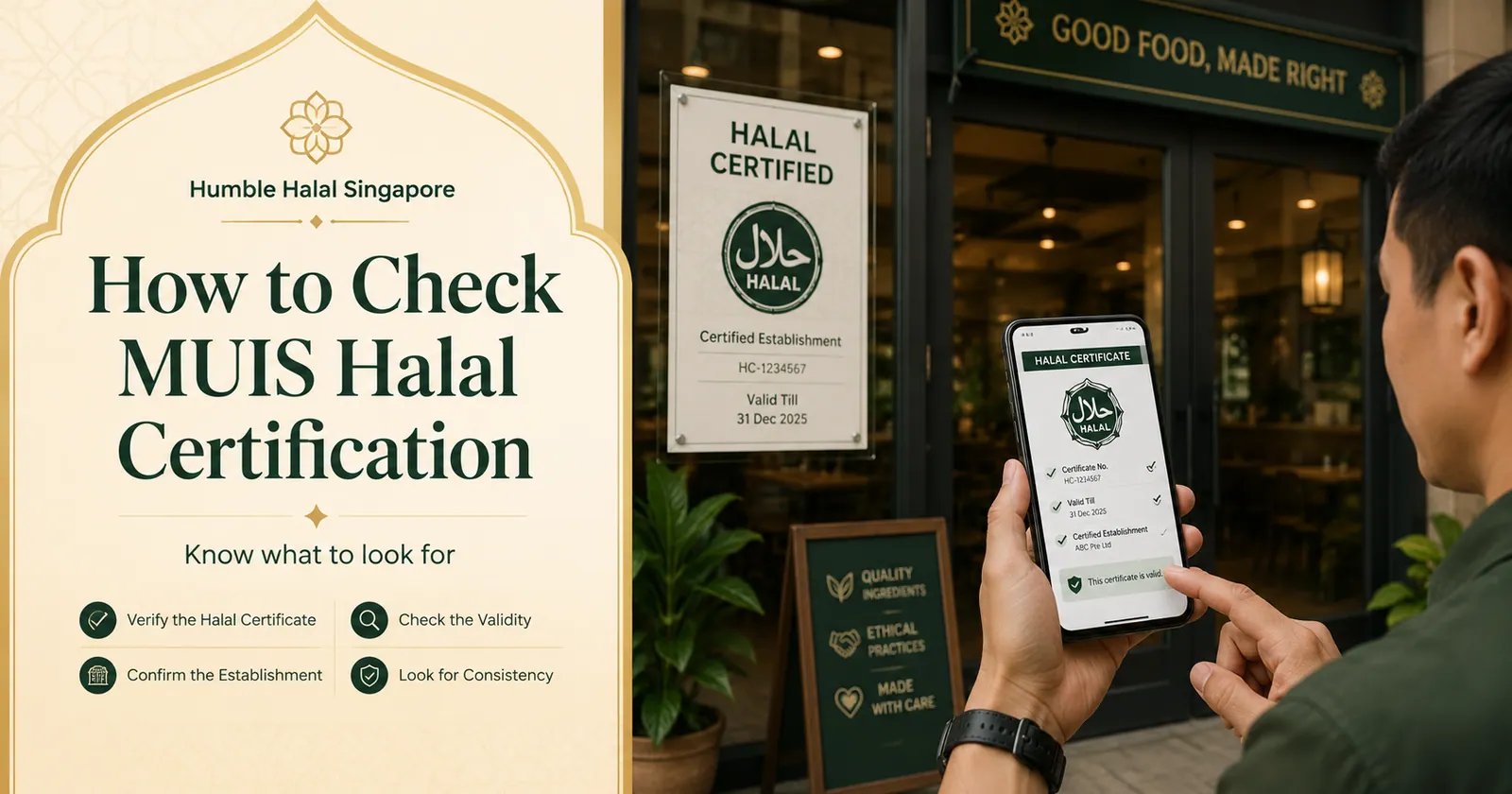
The fastest, most reliable check is the MUIS HalalSG register. If a food product or eatery is certified, it’s listed there. If it isn’t listed, it isn’t MUIS-certified — regardless of any “no pork” signage or a Muslim-sounding name. Certification is outlet-specific and expires, so check the exact business or product rather than assuming a brand is halal everywhere it appears.
Reading labels & E-numbers
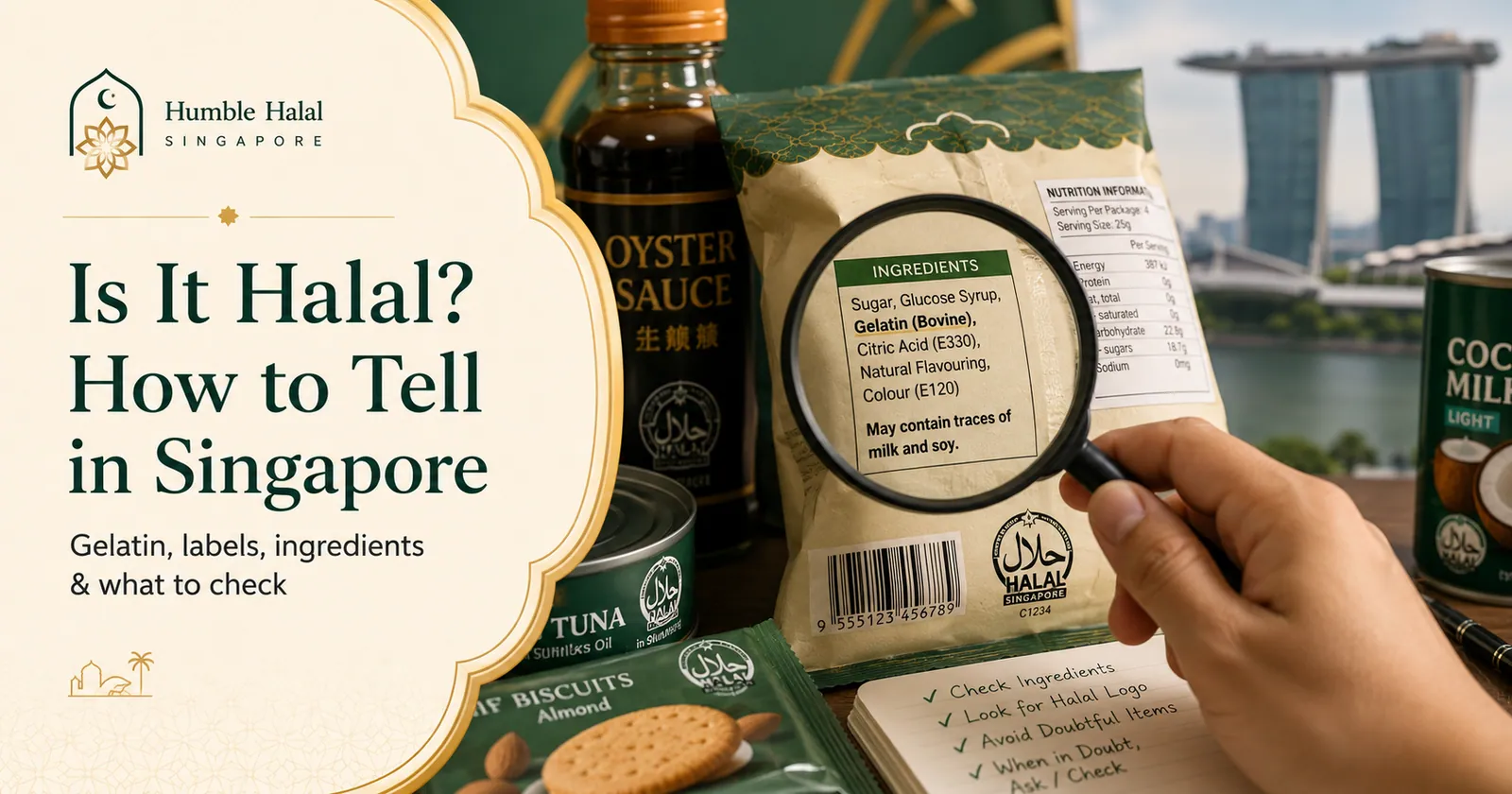
For packaged food, the ingredient list is your next best tool. A few additives are commonly animal-derived and worth a closer look, though many are plant- or synthetic-sourced too — which is exactly why certification, which traces the actual source, beats guessing from a label alone.
- E471 (mono- and diglycerides) — can be animal- or plant-derived
- L-cysteine (E920) — a dough conditioner, sometimes animal-sourced
- Gelatine — often pork-derived unless stated as beef or fish
- Rennet — in some cheeses, can be non-halal animal enzyme
- “Emulsifier”, “enzyme” or “shortening” with no source named
“When something looks ambiguous, treat it as not certified — and verify at the source.”
The Humble Halal TeamThe tricky ingredients
Beyond pork itself, a handful of ingredients quietly make a dish non-halal even at a “no pork” stall. Alcohol in cooking is the big one — mirin, Shaoxing and cooking wine, rum in desserts, and vanilla extract can all carry it. Fermented drinks like kombucha contain trace alcohol and views differ, so certification settles it. Non-halal meat, broth and stock, and animal-derived emulsifiers or enzymes round out the list.
- Alcohol in cooking — mirin, cooking wine, rum, some vanilla extract
- Kombucha & fermented drinks — trace alcohol; check certification
- Soy sauce — some varieties are brewed with added alcohol
- Non-halal meat, broth or stock — even without any pork
- Cross-contamination — shared fryers, grills and utensils
New MUIS-verified spots, mosque events & deals across Singapore — free, every week.
Eating out vs packaged products
The two situations call for slightly different habits. For packaged products, read the label and look for the MUIS mark or an approved overseas certification recognised by MUIS. For eateries, the register is what counts — a certified outlet has been assessed end to end, while a “Muslim-owned” or “no pork, no lard” place is self-declared. Remember the nuance: MUIS-certified is not the same as Muslim-owned, which is not the same as self-declared halal-friendly.
Is [brand] halal? Using the checker
For specific brands and products, Humble Halal maintains an “Is it halal?” checker that cites the MUIS HalalSG status of popular Singapore food brands. Use it as a fast starting point, then confirm on the official register — because a brand can be certified for some products or outlets and not others. To search HalalSG directly, look up the exact company or product name and check the certificate is current.
When in doubt, default to not certified
If a label is ambiguous, a dish’s cooking method is unclear, or a place only claims “no pork, no lard”, the safest call is to treat it as not certified until you can verify. This isn’t about being difficult — it’s the same principle MUIS certification is built on: verify the source rather than assume. On Humble Halal, the halal-confidence score (0–100) makes that judgement quicker, ranking MUIS-certified highest, then admin-verified or Muslim-owned, then self-declared.