Why halal Japanese food keeps growing
Japanese food has become one of Singapore’s favourite cuisines — but authentic recipes lean on ingredients that are quietly off-limits for Muslim diners. That tension is exactly why the halal Japanese scene has grown so fast: dedicated kitchens now recreate sushi, ramen and teppanyaki using halal-certified meat and alcohol-free seasonings, so you can order freely rather than interrogating every dish.
For a cuisine this ingredient-sensitive, certification does more work than usual. A valid MUIS certificate tells you the whole kitchen — sauces, stocks and supply chain included — has been checked, not just that pork is off the menu.
What makes Japanese food halal — or not
The challenge with Japanese cooking is that alcohol and pork are woven into its base flavours, not added on top. Mirin (sweet rice wine), sake and cooking rice wine appear in glazes, teriyaki and simmered dishes; dashi stock and ramen broth can hide non-halal ingredients; and pork shows up as chashu, in gyoza fillings and in tonkotsu broth.
Halal Japanese kitchens swap these out — alcohol-free mirin substitutes, chicken or beef broth in place of tonkotsu, and halal-slaughtered meat throughout — which is why a certificate is so reassuring. Shared fryers and grills are the other detail worth checking at part-halal outlets.
- Mirin, sake & cooking rice wine — in glazes, teriyaki and simmered dishes
- Tonkotsu (pork-bone) ramen broth — look for chicken or beef broth instead
- Chashu, gyoza and some dumplings — traditionally pork
- Dashi and ready-made sauces — can carry non-halal or alcohol-based ingredients
- Naturally brewed soy sauce and shared fryers — worth checking at non-certified spots
“Japanese cooking hides alcohol and pork in its base flavours — which is why certification matters more here, not less.”
The Humble Halal TeamWhat to order with confidence
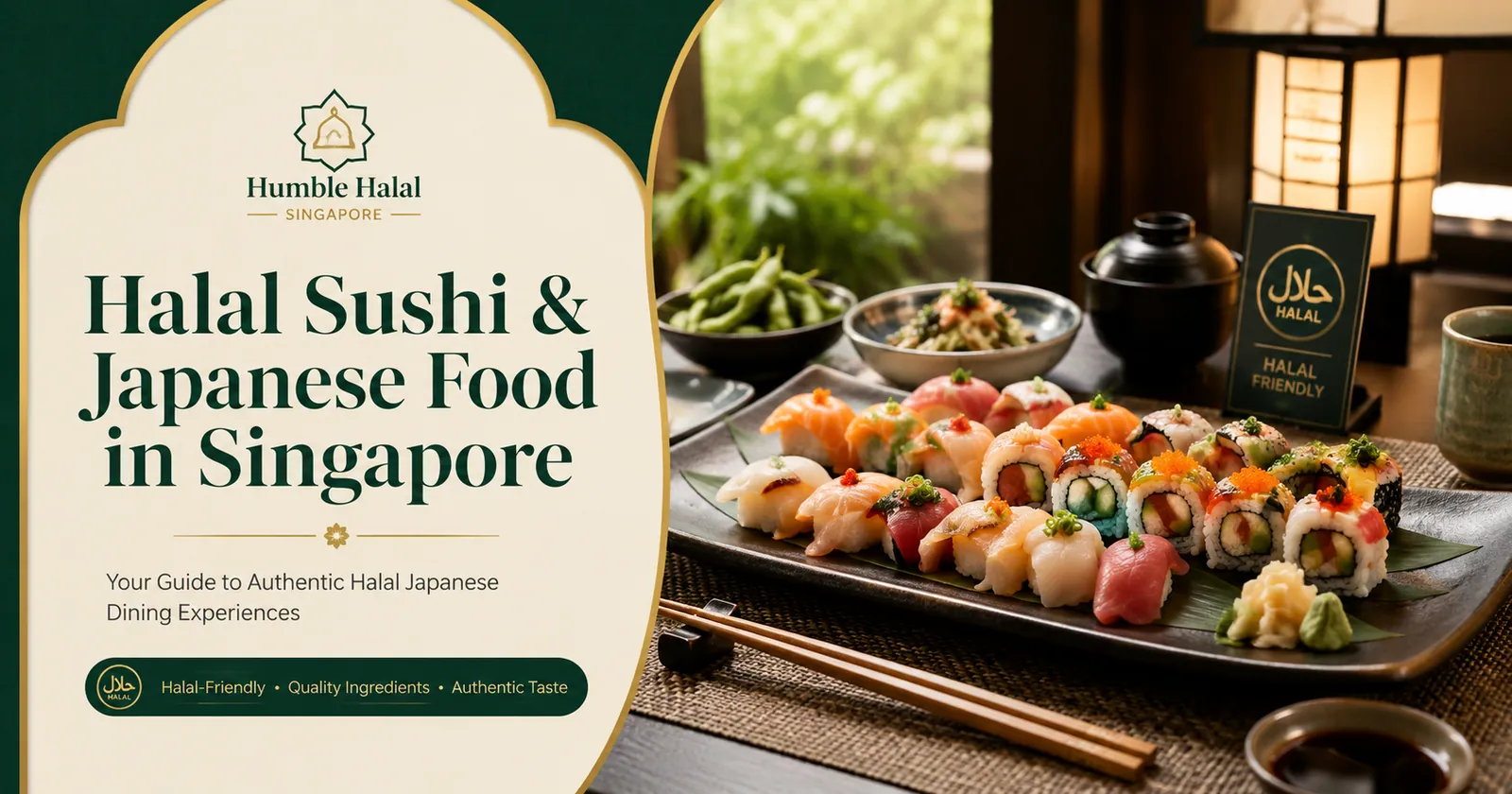
Once you’re at a certified or trusted Muslim-owned outlet, the full menu opens up. The best halal Japanese places cover the classics you’d hope for, from a proper sushi counter to a sizzling teppanyaki grill.
If you’re new to the cuisine, a donburi rice bowl or a chicken katsu set is an easy, wallet-friendly start; from there, work up to omakase-style sushi and premium grills.
- Sushi & sashimi — with halal-sourced fish and seafood
- Ramen — rich chicken or beef broth versions
- Donburi rice bowls — beef gyudon, chicken teriyaki, tempura
- Teppanyaki & yakiniku — grilled halal beef, chicken and seafood
- Tempura & katsu — chicken or beef katsu with tonkatsu-style sauce
- Sides & sweets — edamame, agedashi tofu, matcha and mochi
New MUIS-verified spots, mosque events & deals across Singapore — free, every week.
By budget and occasion
Halal Japanese spans a wide price range, so there’s something for a weekday craving and for a celebration. As a rough guide, a casual donburi or ramen bowl typically runs in the low-teens, mid-range sushi sets and yakiniku sit higher, and teppanyaki counters or omakase-style experiences are the splurge tier.
- Everyday — donburi bowls, ramen and katsu sets, typically wallet-friendly
- Groups & families — yakiniku and teppanyaki for cook-and-share fun
- Date night — a quiet sushi counter or a premium wagyu-style grill
- Travellers & town — certified options around the airport, Jewel and Orchard
How to verify it’s genuinely halal
Because Japanese cooking is so seasoning-heavy, this is a cuisine where you want to check rather than assume. Certification in Singapore is outlet-specific and expires, so a chain being halal at one mall doesn’t guarantee every branch is.
- Search the specific outlet on the MUIS HalalSG register (halal.muis.gov.sg)
- Check the halal-confidence score on Humble Halal — certified scores highest
- Remember: MUIS-certified isn’t the same as Muslim-owned or self-declared “no pork”
- At non-certified spots, ask about the broth, the mirin and shared fryers
Plan your Japanese meal on Humble Halal
Rather than guessing, use the directory to line up your next meal. Browse the halal Japanese listings, filter by area to find a spot near your MRT stop, and open the map to see what’s close by. The “Open now” filter is handy for a late-night ramen run, and the “Is it halal?” checker helps when you’re weighing up a brand you’ve spotted elsewhere.
Because new certified places are added over time and every listing carries a halal-confidence score, the directory stays current in a way a fixed top-ten list never can.