Start with the stall, not the whole food centre
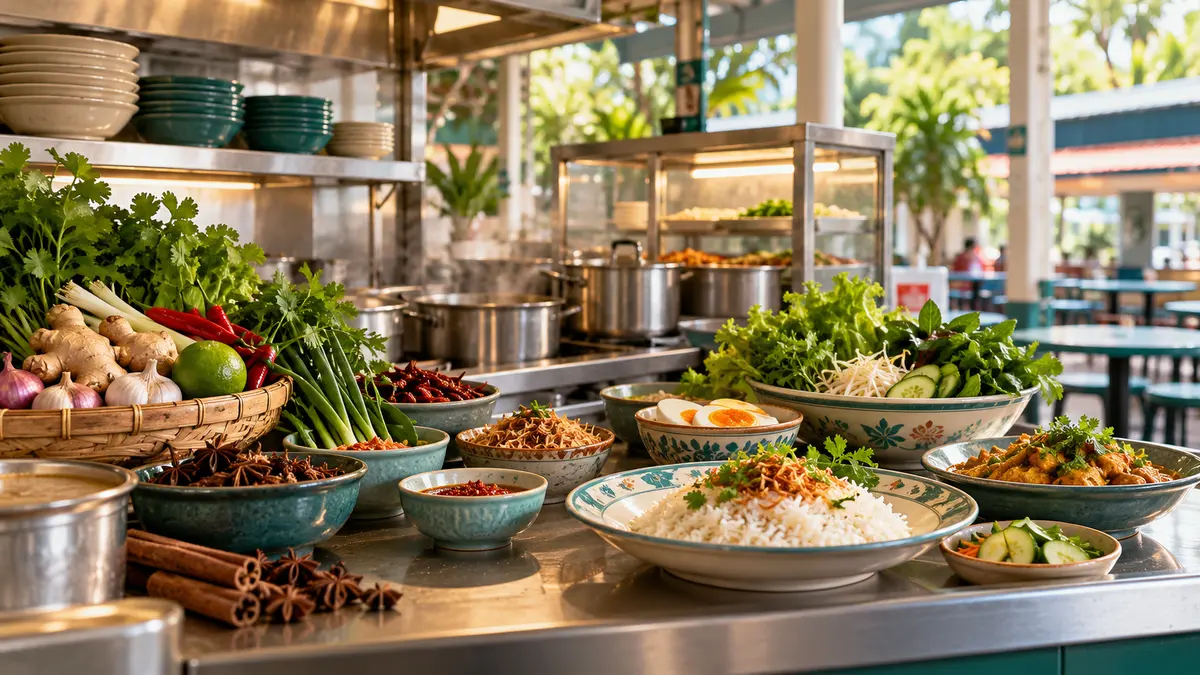
Hawker centres are an everyday Singapore convenience: one person may want soup noodles, another chicken rice and someone else a meat-free meal. The variety is part of the appeal, but it also means neighbouring stalls can have different operators, kitchens, suppliers and halal status. A certificate at one stall is not a blanket certificate for the whole centre.
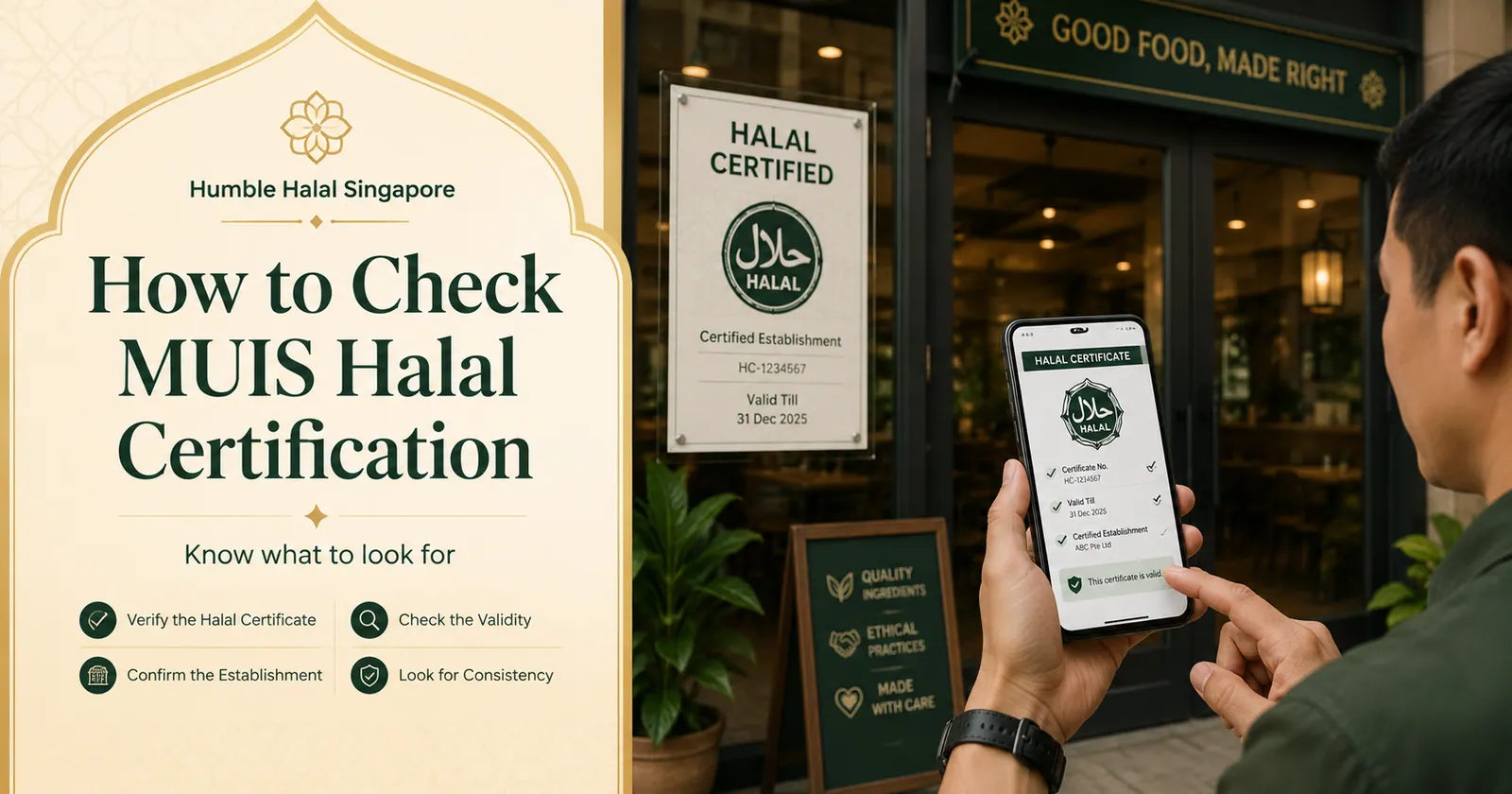
MUIS lists an Eating Establishment scheme that covers eligible retail food establishments and individual stalls. Search the exact operator and location in the official directory and check that the displayed certificate matches the business and premises. Names, stall numbers and operators can change, so a photograph from an old review is not a substitute for today’s check.

What the different descriptions mean
MUIS-certified means a current certificate has been issued under a relevant scheme and scope. Muslim-owned describes the person or business; it is not another way of saying MUIS-certified. “No pork, no lard”, “vegetarian”, “Muslim-friendly” and a food delivery platform badge are also different claims. They can help you start a conversation, but none alone answers every question about ingredients, equipment or current certification.
A non-certified stall may sell halal food; MUIS says stallholders remain responsible for claims they make. Decide what evidence your household needs rather than treating an absent certificate as proof of non-halal food or treating ownership as proof of certification. If the status matters to several diners, agree on the group’s standard before queuing.
A two-minute certificate check
Look for the certificate at the stall and compare the name and address with what you see. MUIS says a certified eating establishment should display a valid original certificate prominently and the certificate name must match the food-stall or company name. Use the current MUIS establishment search to check the exact business and location; digital certificates may include a QR code. A photo of a certificate from another outlet, an expired certificate or an unrelated central kitchen is not enough to establish this stall’s status.
If the stall has recently changed its name, unit or operator and the information does not match, ask before ordering. Do not assume a database search failure proves misconduct: the listing may use a legal name or a different spelling. Ask the operator for the precise registered name, then verify through MUIS.

Ask about ingredients and preparation
When you are relying on the stallholder’s own explanation, ask specific, courteous questions: Where does the meat come from? What is in the stock and sauces? Is cooking wine used? Are the pan, grill, fryer and utensils shared with non-halal food? A clear answer about the exact dish is more useful than asking only whether a menu is “pork-free”.
Complex foods can carry less obvious ingredients. Soup bases, marinades, shortening, gelatin-containing desserts and sauces are worth checking if their source is not clear. Do not make a sweeping ruling about an entire cuisine: one vendor’s recipe is not another vendor’s. If the answer is uncertain, choose a dish or stall for which you have adequate information.
One useful guide to halal food and Muslim life in Singapore, free every Friday.
Plan a group meal without awkward guesswork
For colleagues or family, share the centre and expected timing in advance and identify a few acceptable choices. One person can check the exact stall’s status while another considers mobility, queues and allergy needs. Dietary restrictions are not interchangeable: halal, vegetarian and allergy requirements may overlap but need separate checks.
For a hypothetical group of six, a simple approach is to let each person order from a stall they are comfortable with, then regroup at a table. If one person is collecting all meals, write down the stall and dish for each order. Do not replace an unavailable halal-certified meal with an unverified one without asking the diner.
Avoid common shortcuts at the counter
A long queue, an online “best halal” list or a familiar logo does not establish current certification. Nor does a seller’s use of the same brand at another address prove that this stall is covered. Verify the exact premises and scope when certification is your standard.
Similarly, an ingredient list or a claim that no pork is used may not describe processing and shared equipment. This does not mean every unclear dish is forbidden; it means the information you have may not be sufficient for your own decision. Thank the staff, choose something else if necessary and return when the information is clearer.
Order and carry the food safely
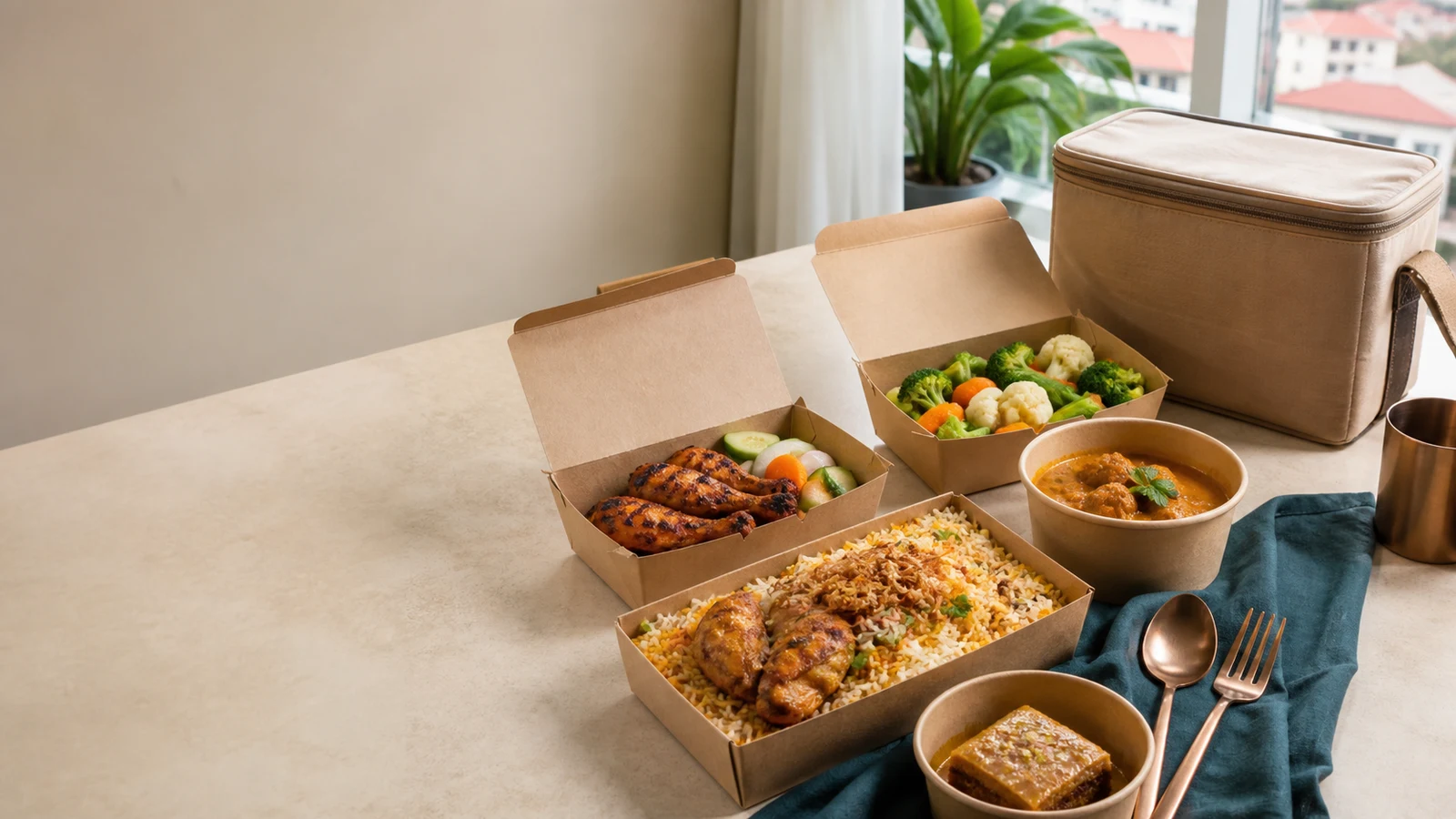
Halal assurance and food safety answer different questions. When taking food back to an office or home, buy it near the time you will eat, receive it promptly and follow the seller’s instructions. SFA advises keeping hot cooked food above 60°C until serving and refrigerated food below 5°C; consult its consumer guide for handling and reheating.
For allergies, speak directly with the stall. A menu’s halal status does not establish that it is free of nuts, dairy, shellfish or other allergens, and a shared fryer can matter for allergies as well as for halal requirements. Tell the person who will actually prepare the meal about severe restrictions.
Your hawker-centre checklist
Before leaving: decide whether everyone requires MUIS certification, note the stall name and unit, and verify the premises in the official search. At the counter: confirm the business and certificate match, then ask about the particular dish if needed. After ordering: keep hot food hot, cold food cold and labelled meals separate.
For a deeper introduction, see Humble Halal’s guide to MUIS certification and its halal food delivery guide. Both reinforce the same practical habit: verify the establishment fulfilling the order rather than assuming the name on a discovery platform tells the whole story.
Sources and further reading
Sources were checked on 28 October 2026. Certification, menus, food safety guidance and airline policies may change; verify the exact product, premises or journey before relying on this guide.