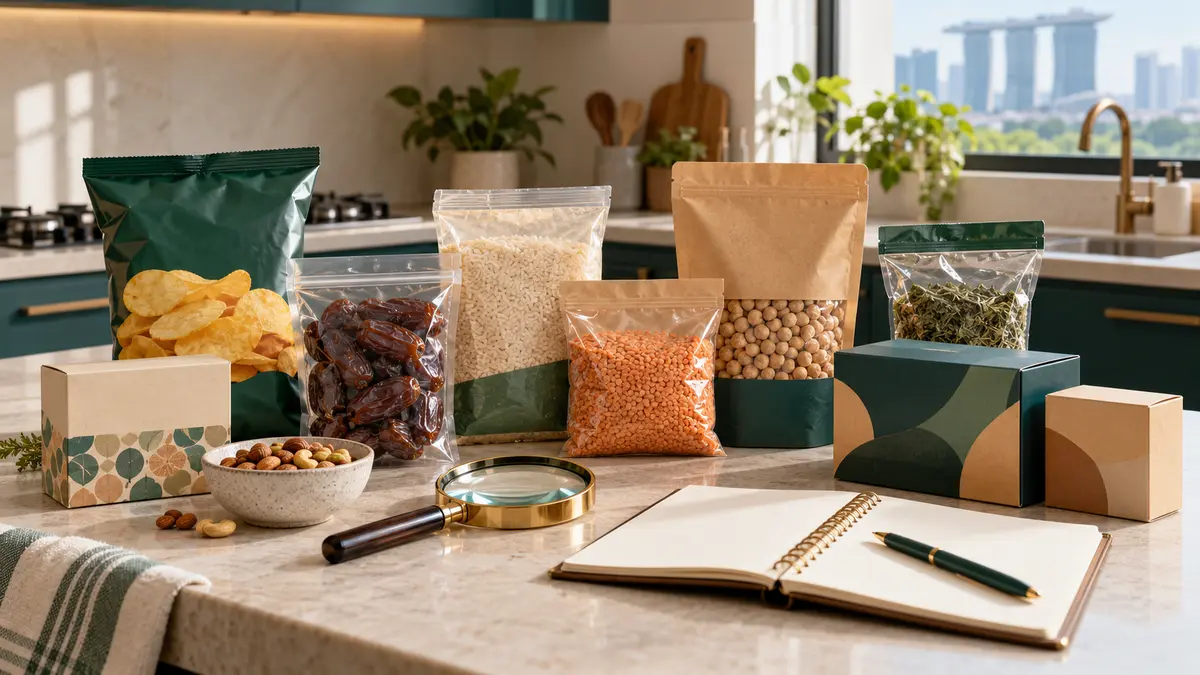
Begin with the exact packet in your hand
Take note of the product name, flavor, manufacturer, production country and batch or date information. A biscuit made for one market may be different from a similarly named biscuit made elsewhere. A brand’s halal status is not a guarantee that every flavor, factory or imported version has the same status.
Check the current physical label or clear photos of all sides if ordering online. A shop’s category tag or an old social-media screenshot is a starting point, not the final check. If key details are missing, ask the importer or seller for a current image and the relevant certificate information before buying in quantity.
How MUIS recognises foreign certifying bodies
MUIS explains that it does not itself certify food products manufactured overseas. It recognises foreign halal certification bodies against its applicable framework, and publishes information about recognised bodies and their marks. Recognition of a body is meaningful context, but it does not automatically prove that every item from a country, manufacturer or brand is certified.
Start at the current MUIS foreign-body page and follow the linked list. Match the body and mark, the country and the product information where available. For questions about a particular product, ask the certifying body or importer whether the certificate is current and covers the factory and product. Recognition and certificate status can change; avoid relying on a fixed copied list.
Understand the difference between a mark and a claim
A halal logo, a “suitable for Muslims” statement and a MUIS certificate are not identical forms of evidence. Look for a recognisable certification mark and the entity behind it. A mark without enough information to identify its issuer deserves further checking; its presence alone is not a reason to infer who certified it.
For products made in Singapore, the MUIS product search can help check a current record. For imported products, begin with MUIS’s guidance on recognised foreign bodies and verify the specific item. If the issuer, market or certificate scope cannot be established, treat the status as unresolved rather than giving a confident yes or no.
Read the ingredients in context
Ingredients are useful clues, not a complete audit of the supply chain. MUIS notes that some substances can have different sources: for example, lecithin can come from plants or animals. The name of an additive or an E-number alone may not tell you its origin. Gelatin, emulsifiers, flavours and processing aids may warrant a product-specific question.
Avoid assuming that every flavour, vinegar or fermented ingredient has the same ruling. MUIS has published specific guidance on ethanol used as a flavouring solvent with conditions and limits; it is not a simple rule to apply to every alcoholic drink or product. When uncertain, consult MUIS guidance and the certifier, and choose another verified item if that better suits your family.

One useful guide to halal food and Muslim life in Singapore, free every Friday.
A worked example: two similar chocolates
Imagine two bars sold under the same brand. One is a plain bar with a certification mark and a clearly stated factory. The other is a filled praline made in a different country with a different ingredient list. Checking the first bar does not establish the second bar’s status. For each, note the exact flavor, producer, country and issuing body; then check the appropriate current records or ask the importer.
The same method applies to instant noodles, confectionery, frozen meals and sauces. Check for alcohol-containing fillings or animal-derived ingredients when relevant, but do not declare a product non-halal merely because you have not identified an ingredient’s source. “Not yet verified” is a useful, honest result.
Buying online or by the carton
Before a large order, ask the seller to confirm that the product photo is the exact version being shipped, including manufacturer, country, flavour and certification mark. Check expiry or best-before information, packaging condition, storage requirements and delivery timing. Keep the product listing and relevant confirmation with your receipt.
For chilled or frozen goods, arrange for someone to receive the delivery and transfer it promptly to suitable storage. SFA advises checking packaging integrity and expiry information and keeping cold food refrigerated or frozen as directed. A halal mark does not replace food safety, allergen or storage checks.

When information conflicts
If an old article says yes but the current package looks different, trust neither source blindly. Compare the exact flavor, factory, market and date. Ask the retailer for the importer’s name, contact the certifier or manufacturer, and request the relevant scope rather than a generic corporate statement.
A supplier saying “we use halal ingredients” is not necessarily saying that the finished product is certified. Keep those descriptions separate. If the label and certificate do not match, postpone the group order or choose a product whose current evidence you can establish.
A reusable five-step shopping check
First, identify the actual product and manufacturing country. Second, locate the certification mark or claim. Third, identify the issuer and use the current MUIS foreign-body information where relevant. Fourth, check the product or factory scope with the issuer or importer if it is unclear. Fifth, check allergens, storage and packaging independently.
Save the date and the version you checked, especially for an event. Recheck when the formula, country or supplier changes. This is a practical decision trail, not a substitute for an authoritative certification decision.
Sources and further reading
Sources were checked on 28 October 2026. Certification, menus, food safety guidance and airline policies may change; verify the exact product, premises or journey before relying on this guide.