Set the ground rules before asking for dishes
A potluck can mean home-cooked dishes, restaurant takeaway, supermarket products or all three. The organiser’s first job is to ask what participants need, not assume that one label covers every person. Decide whether the group requires food from MUIS-certified providers, permits home-prepared dishes with agreed checks, or would prefer individually purchased meals.
Communicate the decision kindly and early. For example: “Please check with the organiser before bringing a dish; we will confirm ingredients, preparation and any certification needed.” An agreed rule prevents a colleague from spending time preparing food that others cannot confidently eat. Treat dietary information as personal: collect it privately and share only what is needed to label the food.
Separate certification, ingredients and home preparation
A restaurant certificate applies to the certified establishment and scope; it does not automatically certify food once someone opens it, adds ingredients or prepares another dish at home. A store-bought product can be one ingredient in a meal, but the complete dish and its preparation still need consideration.
If a colleague brings a home-cooked dish, do not label it MUIS-certified unless there is a valid certificate that actually covers the product and arrangement. Ask the cook about ingredients, stock, sauces and kitchen equipment using the group’s agreed standard. If people prefer a certified source, avoid pressuring them to accept a personal assurance instead.
Make an ingredient and allergen card
Give contributors a simple template: dish name; person responsible; major ingredients; any sauces or stock; relevant certification evidence or explanation; common allergens; preparation time; and whether the dish needs refrigeration. Keep original packaging for packaged items where possible. “Vegetarian” and “halal” do not tell a diner whether the food contains nuts, eggs, milk or shellfish.
For a serious allergy, a card is only the start. Ask the diner what information they need and speak to the cook or supplier about ingredients and cross-contact. If a safe answer cannot be obtained, arrange a separate suitable meal rather than guessing. Make clear that voluntary home cooking cannot promise a risk-free environment.
Balance the menu with a worked example
Imagine twelve colleagues sharing lunch. The group agrees on three substantial mains, two vegetable sides, fruit, dessert and drinks. Ask the contributors what a tray actually serves; then add those stated portions rather than assuming every large-looking container feeds the same number. If the organiser orders twelve main portions and everyone also contributes sides, document that the extras are optional rather than another full meal per person.
This is a planning example, not a universal portion rule. Appetite, whether food replaces lunch, dietary needs and serving duration change the amount. Assign one person to coordinate plates and cutlery, another to receive food, and a backup provider for a missing main. Check the exact outlet and current halal evidence for any purchased dishes.
One useful guide to halal food and Muslim life in Singapore, free every Friday.
Plan time and temperature before the food arrives
Ask contributors when each dish was prepared and how it should be transported. SFA advises serving food immediately after cooking, keeping hot food above 60°C until serving and cold food refrigerated below 5°C. Schedule delivery close to eating time and use the office fridge or suitable equipment rather than leaving a buffet at room temperature all morning.
Food that needs temperature control requires a realistic plan for transport, storage and service; a label is not a substitute. Follow the supplier’s consumption instructions, keep serving time short, and consult SFA’s current consumer guidance. If you cannot establish whether a perishable dish was handled safely, do not serve it merely to avoid waste.
Set up a table people can navigate
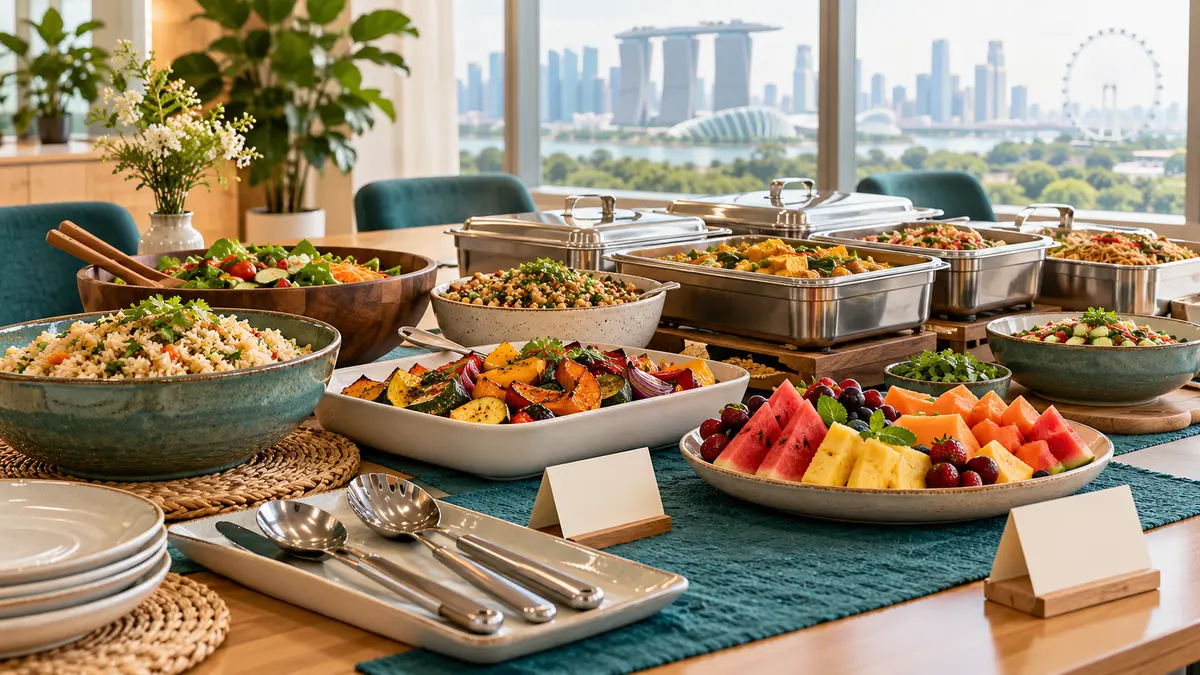
Place ingredient cards in front of each dish. Keep dedicated serving utensils with each tray and replace them if they are mixed. Put individually labelled allergy-sensitive meals aside as agreed with the diner. If the event has vegetarian options, use separate utensils and mark them clearly; separate handling supports, but does not by itself certify, the food.
Ask contributors to identify sauces and garnishes that are served separately, because these can change the ingredients of a plate. Place hot and cold items where their required temperatures can be maintained. Arrange a bin and clean-up plan, and appoint someone to answer questions without pressuring anyone to eat.
Handle leftovers and closing time
Decide in advance who can take remaining food and when it will be put away. Follow SFA’s advice on refrigeration and reheating, and do not repeatedly reheat a dish. Avoid leaving food in an unattended meeting room through the afternoon and guessing whether it is still safe.
Keep original product labels and dish cards with leftovers so people know what they are taking. For chilled desserts, verify whether cold storage is available before ordering. Do not insist that someone take food home when they cannot maintain the required temperature on the journey.
Copy this organiser’s timeline
One week before: collect dietary needs and agree the halal evidence standard; decide whether home-cooked items are suitable for this particular group. Three days before: assign mains, sides and drinks; check certification and obtain ingredients and allergen information. One day before: confirm headcount, receiving time, fridge space and labels.
On the day: receive and label food, confirm the handling instructions, maintain suitable temperatures and put a separate utensil with each dish. After the meal: follow the agreed leftover plan and record any issue so the next organiser can improve the process. Adapt the timeline to the size and complexity of the event.
Sources and further reading
Sources were checked on 28 October 2026. Certification, menus, food safety guidance and airline policies may change; verify the exact product, premises or journey before relying on this guide.