What is a songkok?
The songkok is the classic Malay cap: a stiff, flat-topped cylinder, usually made of black velvet or felt, worn by Malay-Muslim men. It's a mark of formality and identity, worn for Friday and Eid prayers, weddings, national and religious occasions and official events. In Singapore you'll see it paired with the baju melayu, and it's part of many uniforms and ceremonial outfits too.
Songkok come in different heights and finishes — a taller cap reads more formal, while some have subtle texture or trim. Black is the default, but you'll also find other colours for matching to an outfit.
- A flat-topped velvet or felt cap for Malay-Muslim men
- Worn for prayer, weddings and formal occasions
- Usually black, in a range of heights and finishes
Songkok vs kopiah: what's the difference?
The two terms are sometimes used loosely, but they usually refer to different caps. The songkok is the tall, structured velvet cap described above. The kopiah — often called the "haji" cap or simply a skullcap — is typically shorter and rounder, and frequently crocheted, knitted or woven in white or patterned cotton, sometimes with intricate openwork.
Many men own both: a kopiah for everyday prayers because it's light and breathable, and a songkok for formal occasions. The kopiah is also commonly associated with those who have performed the Hajj, hence the "haji cap" nickname, though anyone may wear one.
- Songkok — tall, structured, velvet or felt, formal
- Kopiah — shorter skullcap, often crocheted or woven, everyday
- Many men keep both for different occasions
One useful guide to halal food and Muslim life in Singapore, free every Friday.
How to choose the right fit
Comfort comes down to the fit around the head, so trying a cap on makes a real difference. A songkok should sit snugly without pinching or leaving a deep mark, and shouldn't slide when you look down in prayer. Caps are generally sized by circumference, so knowing your head measurement helps if you're buying as a gift.
Think about the occasion too: a taller, plush velvet songkok suits weddings and Hari Raya, while a lighter kopiah is easier for daily wear in Singapore's heat. Check the stitching and the firmness of the brim, as these affect how well the cap keeps its shape over time.
- Try it on — it should sit snug without pinching
- Know your head circumference for gifts
- Taller velvet for formal wear; light kopiah for daily use
- Check stitching and brim firmness for durability
Where to buy in Singapore
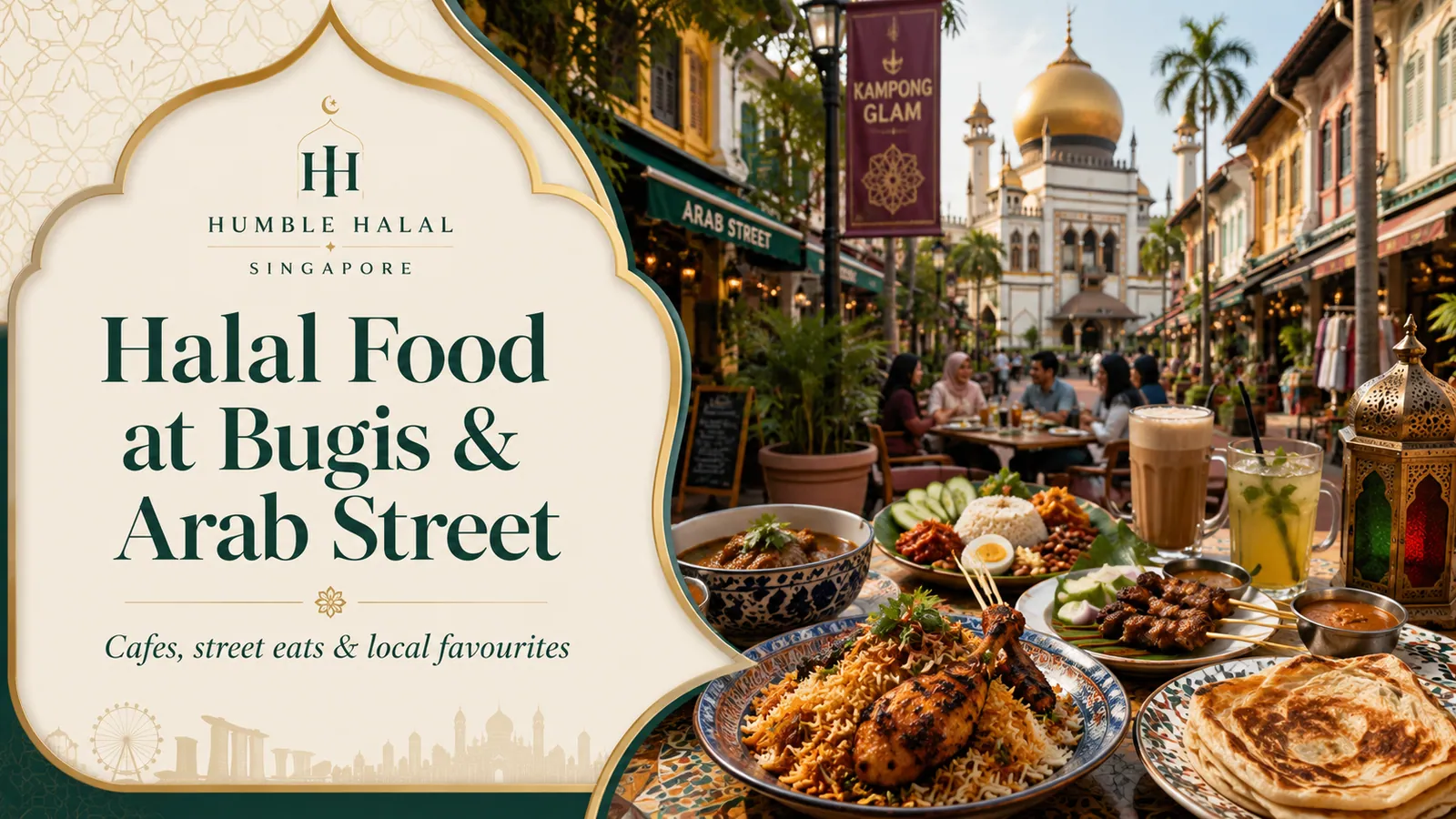
The traditional shopping areas for Malay-Muslim attire are the best places to start. Kampong Glam and the Arab Street district — around Bussorah Street and the lanes near the Sultan Mosque — have long been home to textile and clothing shops carrying baju melayu, songkok and kopiah. The Geylang Serai area, with its market and surrounding shops, is another well-known hub, and it comes alive with Hari Raya bazaars before Eid.
You'll also find caps at general Muslim lifestyle and clothing retailers around the island, and many stores stock up heavily in the weeks before Ramadan and Hari Raya. If you have a specific shop in mind, check its current opening hours directly, and look for Muslim-owned clothing retailers.
- Kampong Glam / Arab Street — textile and attire shops near the Sultan Mosque
- Geylang Serai — market area and Hari Raya bazaars
- Stock is widest in the run-up to Ramadan and Hari Raya