Where to find halal Vietnamese food in Singapore
Singapore's halal Vietnamese scene is small enough to understand without a directory dump. Begin with the type of assurance you want, then the area. The most distinctive independent option is Eminami, whose official site describes it as a certified Muslim-Owned Enterprise using halal ingredients. It operates at 46 Kandahar Street in Kampong Glam and at E!Hub in Downtown East, giving central and east-side diners a practical starting point for pho, banh mi, spring rolls, broken rice and Vietnamese coffee.
Certified chain restaurants can be useful for predictable mall access, while Muslim-owned independents often provide a more focused regional menu. Those are different benefits, not a ranking. Search the exact outlet, confirm its current label and look at the live menu before travelling. Vietnamese kitchens can change dishes and operating hours, and a restaurant's own halal statement should not be rewritten as MUIS certification unless MUIS currently supports that stronger claim.
- Kampong Glam: useful for a meal near Masjid Sultan and Bugis
- Downtown East: convenient for Pasir Ris families and east-side outings
- Mall chains: easier access across several neighbourhoods
- Always verify the exact premises and current menu
What to order first: pho, banh mi and spring rolls
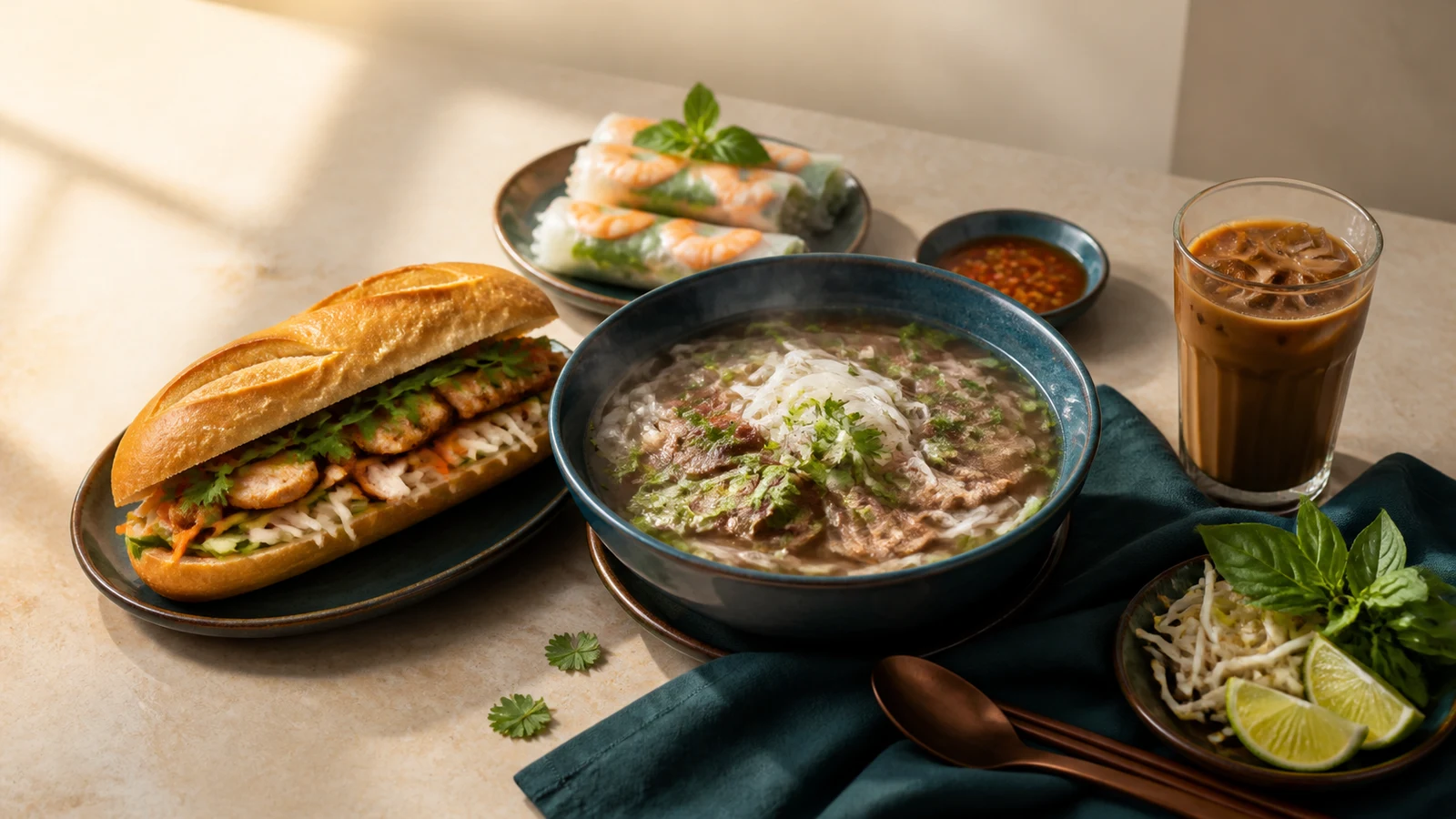
Pho is the best introduction when you want to understand the kitchen. The bowl depends on its broth: patient simmering, warm spices, rice noodles and a fresh plate of herbs. Beef pho is deeper and richer; chicken pho is usually lighter. Add herbs and lime gradually, taste before reaching for chilli, and keep the broth clear enough to notice the balance. A halal kitchen replaces any non-halal meat or stock with suitable verified ingredients.
Banh mi gives you contrast—crisp baguette, savoury filling, pickled vegetables, cucumber and herbs. Traditional versions may contain pork or pate, so the restaurant's halal status and exact filling matter. Fresh rice-paper rolls are a lighter choice; fried spring rolls deliver more crunch. For two people, a sensible first order is one pho, one banh mi and a plate of rolls to share. It covers soup, bread and herbs without ordering half the menu.
- Pho bo: beef noodle soup with herbs and lime
- Pho ga: lighter chicken noodle soup
- Banh mi: crisp baguette with halal meat or a vegetarian filling
- Goi cuon and cha gio: fresh and fried spring rolls
Translation tells you what a Vietnamese dish is; current evidence tells you whether the exact version is halal.
Beyond pho: bun bo Hue, broken rice and dry noodles
Bun bo Hue is the option for diners who want a more aromatic, often spicier soup. Its thicker noodles and lemongrass character distinguish it from pho. A halal version needs verified meat and stock because traditional recipes can include pork components. Broken rice, or com tam, is easier for someone who prefers a composed rice plate: grilled chicken or beef, pickles, vegetables and sauce around fractured rice grains with a pleasantly different texture.
Dry noodle bowls sit between salad and a full hot meal. Rice noodles, grilled meat, herbs, vegetables and dressing make them refreshing in Singapore's heat. Eminami's current online menu also lists Phan Thiet-inspired dishes, Vietnamese tapas and vegetarian choices, reflecting the founder's regional background. Ask what is available that day rather than treating any online list as fixed; sold-out items and branch-specific menus are normal for small kitchens.
- Bun bo Hue: bold lemongrass noodle soup
- Com tam: broken rice with grilled protein and pickles
- Dry noodles: herbs, vegetables, grilled meat and dressing
- Banh xeo: crisp savoury crepe; verify filling and dipping sauce
Is Vietnamese food naturally halal?
Vietnamese food is not automatically halal. Many recipes are built around rice, herbs, vegetables and seafood, but pork is common in banh mi, spring rolls, noodle toppings and pate. Broths may use pork bones, and sauces or marinades may contain ingredients that need checking. A vegetarian dish can still be cooked in a shared non-halal kitchen or served with a sauce whose ingredients are unclear.
The best evidence is a current MUIS certificate for the exact premises. A clearly Muslim-owned restaurant is another meaningful label, but it should be described accurately rather than upgraded to certification. A "no pork" claim only answers one question. If the status is not independently verified, ask about meat suppliers, stock, pate, shared fryers and cooking alcohol, or choose a certified alternative. Humble Halal records these distinctions so readers can decide with the assurance level they prefer.
- Pork and pork pate in traditional banh mi
- Pork bones or non-halal meat in broth
- Unverified meat in grilled fillings
- Shared preparation and changing sauces
New MUIS-verified spots, mosque events & deals across Singapore — free, every week.
Vietnamese coffee, desserts and ingredients to check
Vietnamese coffee is typically strong robusta coffee paired with condensed milk and poured over ice, though coconut coffee, salted coffee and egg coffee have become popular. The base ingredients can be straightforward, but bottled syrups, flavourings and toppings deserve the same product-level check as any café drink. Egg coffee is rich and dessert-like; anyone avoiding raw or lightly cooked egg should ask how the topping is prepared.
Desserts may feature coconut, sticky rice, mango, flan or beans. Ask about gelatine in jellies and alcohol in modern flavour variations. Cross-check allergens too: peanuts, fish sauce, shellfish, eggs and dairy appear across the cuisine. Halal does not mean allergen-free. A diner with a serious allergy should contact the restaurant before visiting and confirm both the ingredient and shared-preparation risk.
- Ca phe sua da: iced coffee with condensed milk
- Coconut or salted coffee: modern, creamy alternatives
- Flan and sticky-rice desserts: check egg, dairy and gelatine
- Common allergens: peanuts, shellfish, fish sauce, eggs and dairy
How to plan a Vietnamese meal for different groups
For a quick solo lunch, pho or a broken-rice set is complete without extra ordering. For two, share rolls and split a soup and sandwich if the restaurant permits. A family should mix mild and bold dishes: chicken pho for comfort, grilled meat with rice for familiarity, spring rolls for sharing and sauces on the side for children. Larger groups benefit from calling ahead because small restaurants may have limited tables or branch-specific reservations.
Kampong Glam makes an easy prayer-friendly outing. Eat on Kandahar Street, walk the heritage area and plan salah at Masjid Sultan, checking the mosque's current visitor and prayer information. At Downtown East, combine the meal with the complex's family activities and verify any on-site prayer facility directly. The useful plan joins one meal, one nearby activity and one prayer stop rather than crossing Singapore for several unrelated recommendations.
- Solo: one noodle soup or rice set
- Two people: rolls plus two contrasting mains
- Family: mild broth, grilled rice dishes and sauces on the side
- Group: reserve at peak times and confirm branch menu
How to read a Vietnamese menu with confidence
Menu names become simple once you recognise a few words. Pho is noodle soup; bo is beef and ga is chicken. Bun usually signals rice vermicelli, while com is rice. Goi often describes a salad or fresh mix; cuon means rolled. Nuong means grilled, xao means stir-fried and chay indicates vegetarian. These translations help you understand the dish, but they do not prove halal status.
Read the English description for protein and broth, then check the restaurant label. If something is unclear, ask one precise question. "Is the broth made only with halal beef and chicken?" is more useful than "Is this Vietnamese?" Keep in mind that fish sauce is normal in the cuisine and halal when its ingredients and production are suitable; the mere word "fermented" does not automatically make a food impermissible. For religious rulings, consult a qualified authority rather than a restaurant roundup.
- Bo = beef; ga = chicken; chay = vegetarian
- Pho = noodle soup; bun = vermicelli; com = rice
- Nuong = grilled; xao = stir-fried; cuon = rolled
- Translation explains a dish but does not certify it
A first-timer's order at Eminami
Eminami's current menu supports a balanced first meal. Choose classic beef or chicken pho, add fresh prawn or grilled-chicken rolls, and share a banh mi if the table is hungry. Diners who like spice can choose bun bo Hue, while a broken-rice plate gives a non-soup alternative. Finish with Vietnamese iced coffee or a coconut latte. Current posted prices generally place individual mains in the low-to-mid teens, but confirm the branch menu before visiting.
The point is not that one restaurant defines the whole cuisine. Eminami is a useful, current, Muslim-owned entry point with a founder story connected to Phan Thiet and a broad menu. Use it to learn what you enjoy, then compare other certified or clearly labelled Vietnamese options through the directory. We do not accept payment to change halal status or rank, and every outlet mention remains subject to a fresh check.
- Starter: fresh or fried spring rolls
- Main: pho, bun bo Hue, banh mi or broken rice
- Drink: iced milk coffee, coconut coffee or tea
- Check current availability and prices at the chosen branch
The 10-minute halal Vietnamese food plan
Pick Kampong Glam or Downtown East based on your route. Confirm the exact restaurant label and today's hours. Choose one soup, one bread or rice dish, and one vegetable- or herb-forward side for the table. Check allergies and reserve if visiting at a weekend peak. Add a nearby prayer stop or activity, and keep a second certified option in the same area in case of a closure.
This structure answers the real search behind "halal Vietnamese food Singapore": not just what exists, but how to order without uncertainty. Save the dish glossary, use the official restaurant menu for today's details and verify the status at premises level. That is enough to turn an unfamiliar cuisine into a confident first meal.