Is mala halal?
Mala itself — the numbing-spicy Sichuan seasoning of chillies and peppercorns — is just a spice blend, so the flavour is not the issue. What matters is the meat, the stock and the wok. Many mainstream mala stalls cook pork and non-halal meat in the same equipment, which is why you should seek out a stall that is specifically halal-certified or Muslim-run.
- The spice blend is fine — the meat, stock and shared woks are the concern
- Look for a MUIS certificate or the Muslim-Owned label
- Confirm no pork, lard or non-halal broth in the base
Mala xiang guo vs mala hotpot
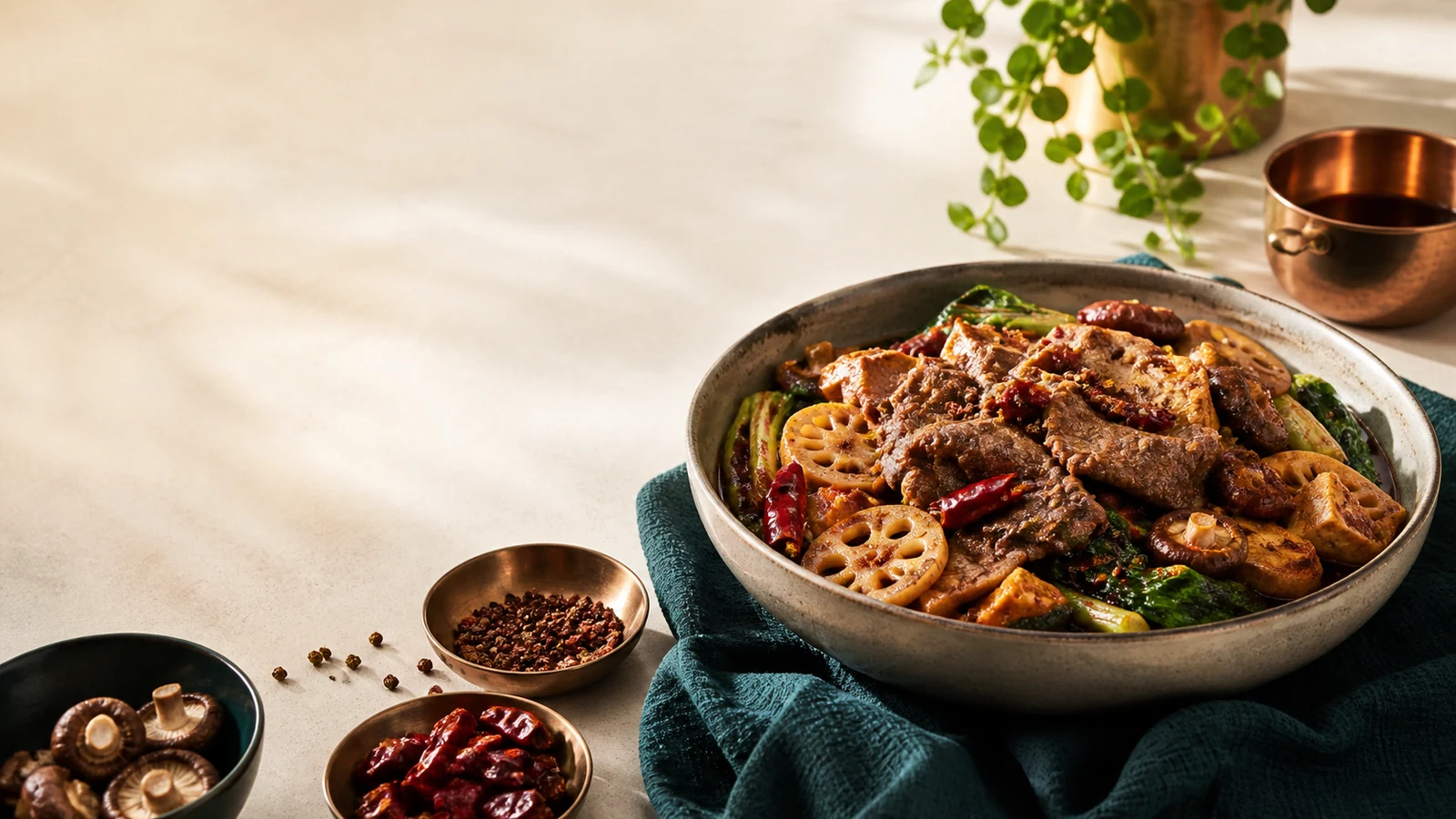
Mala comes two main ways. Mala xiang guo is the dry, wok-tossed version where you pick your ingredients by weight and choose your spice and numbness level — quick, portable and the more common halal format. Mala hotpot (malatang or steamboat-style) simmers everything in a spicy broth, so the stock's halal status matters as much as the ingredients.
- Xiang guo — dry stir-fry, pick-your-own ingredients, choose spice level
- Hotpot / malatang — simmered in broth; check the broth is halal
- Both let you control heat: xiao la (mild) to da la (very spicy)
One useful guide to halal food and Muslim life in Singapore, free every Friday.
How to find a halal mala stall
Halal mala has boomed, so you have options — but verify each one. If a stall can't show certification and isn't clearly Muslim-run, treat it as unconfirmed. For current certification, check the exact outlet on the MUIS HalalSG register and confirm details directly before visiting.
Ordering tips
Mala is priced by weight, so it is easy to overshoot. Grab a basket, keep an eye on how much you pile in, and tell the stall your spice and numbness level. Popular halal-friendly picks include lotus root, enoki, fishball, chicken, luncheon-style halal meat, cabbage and instant noodles.
- Priced by weight — pace yourself when filling the basket
- State your level: xiao la (mild), zhong la (medium), da la (spicy)
- Crowd-pleasers: lotus root, enoki, fishball, chicken, cabbage, noodles