Choose the delivery format before the restaurant
"Halal food delivery" covers several different jobs. One hot dinner for two, five weekday tingkat meals, a family tray, twenty office lunch boxes and a birthday finger-food spread should not be compared in one list. Decide the number of eaters, serving time, budget per person and whether food must arrive individually packed. Once the format is clear, the suitable providers shrink from hundreds to a manageable shortlist.
For an ordinary dinner, use a restaurant with a delivery radius and menu that travels well. For recurring meals, compare tingkat menus, skip policies and delivery days. For a group, mini buffets or bento boxes make portions easier. For an event, use a certified caterer with written setup and food-safety terms. The delivery app is only the transport and ordering layer; the underlying kitchen and product remain the halal-status question.
- One meal: restaurant delivery
- Weekday routine: tingkat or meal plan
- Small group: bento boxes, family trays or mini buffet
- Event: certified caterer with service and setup terms
How to check a delivery listing is really halal
App categories and badges help with discovery, but they can be misapplied or outdated. Open the restaurant profile, identify the exact outlet fulfilling the order and verify it in the current MUIS directory. If the listing says Muslim-owned, keep that as a separate label. If it says only "no pork," do not assume the meat, stock, sauces and preparation are fully halal.
Watch virtual brands and shared kitchens. A delivery-only name may operate from another restaurant or central kitchen, so search the legal entity and address shown at checkout or on the receipt. Certification is premises- and scope- specific. If you cannot connect the storefront to clear evidence, ask the platform or restaurant before ordering. For a large group, save the verification and invoice because you are choosing on behalf of other diners.
- Exact outlet or central kitchen
- Current certificate and relevant scope
- Separate certified, Muslim-owned and self-described labels
- Extra caution for virtual brands and shared kitchens
A delivery filter finds options; a current premises check tells you which kitchen you are trusting.
Delivery app or direct restaurant ordering?
Apps make comparison fast, show courier progress and provide centralised customer support. Direct ordering may offer a wider menu, lower item prices, loyalty rewards or delivery handled by the restaurant. Neither route is always cheaper. Add the item total, delivery fee, platform fee, small-order charge and minimum spend, then subtract only a promotion you can actually use.
Choose based on risk as well as price. An app can be useful when live tracking and formal support matter. Direct ordering can be better for a large or complex request because staff control the menu and can confirm details. Do not split a group order across several unknown couriers just to save a few dollars; staggered arrival and missing items can cost more in time and frustration than the discount.
- Compare final checkout totals
- Check menu differences and promotion conditions
- Use direct contact for allergies or large custom orders
- Use tracking and support when delivery timing carries more risk
What food travels well in Singapore
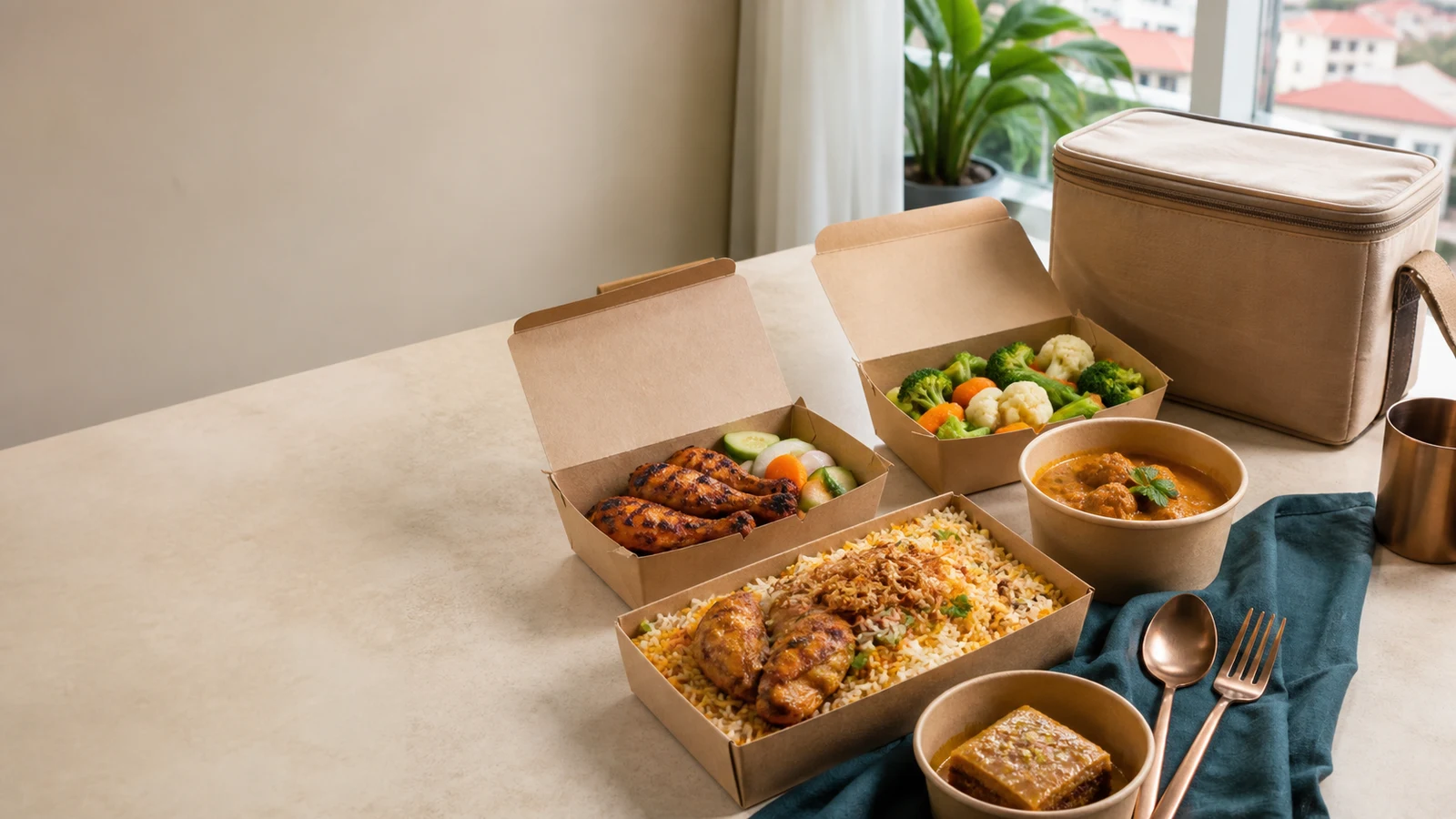
Rice bowls, briyani, nasi padang, curries, grilled meats, pasta with sauce packed separately and many noodle dishes travel reliably. Fried food loses crispness in steam, soft eggs keep cooking, and ice cream is unforgiving of delays. Ask for sauces and crunchy garnishes on the side when possible. For a journey over thirty minutes, choose food that remains enjoyable after a short rest.
Singapore weather matters. Hot food should arrive hot and cold food cold; do not leave either at a guardhouse or office reception for long. Check packaging before serving and discard food that smells wrong, has leaked badly or appears to have spent too long at an unsafe temperature. When the restaurant provides reheating instructions, follow them rather than guessing with delicate dishes.
- Travels well: rice sets, curries, grills and sauced pasta
- Request separate sauce for fried or crisp food
- Avoid long journeys for frozen desserts and fragile plating
- Receive promptly and follow storage or reheating instructions
New MUIS-verified spots, mosque events & deals across Singapore — free, every week.
Halal tingkat and recurring meal delivery
Tingkat solves planning fatigue rather than one evening's hunger. Compare the number of delivery days, lunch or dinner timing, menu rotation, rice options, minimum commitment, skip policy and whether containers are disposable or reusable. Ask which kitchen fulfils the meals and verify that current premises. A four-week package is only good value if the household will eat most deliveries.
Review actual dishes, not just cuisine labels. Families may need less chilli, elderly diners may prefer softer food, and fitness goals may require clearer protein or portion information. Medical dietary needs deserve direct provider confirmation. Start with a trial period where possible, keep notes on portion size and delivery consistency, then commit only if the service reduces effort without creating waste.
- Delivery days, time window and public-holiday schedule
- Menu rotation, portion size and rice choice
- Skip, cancellation and container policy
- Exact certified production kitchen
Family meals, office lunches and party food
Family trays are economical when everyone eats similar food; individual boxes are better for different spice preferences or portion control. For an office, collect dietary requirements before ordering and label vegetarian, allergen- aware and special meals by name. Schedule delivery at least thirty minutes before lunch and provide loading-bay or reception details.
Finger food needs a quantity plan. Count pieces per person based on whether it replaces a meal or supports one, and mix substantial savouries with lighter bites. For a full event, use a caterer rather than stacking dozens of ordinary restaurant orders. Certified catering covers a different production and service need, and the quotation can specify setup, collection, disposables and safe consumption time.
- Family: trays when tastes align; boxes when they do not
- Office: named dietary labels and early reception delivery
- Party: pieces per person and a balanced savoury mix
- Large event: certified caterer with written service scope
Fees, minimum spend and delivery zones
Low menu prices can be offset by small-order charges, peak delivery, platform fees and minimum spend. Compare the final amount per diner. Islandwide delivery often has a higher fixed fee, while nearby app delivery can rise with demand. Restricted locations such as Sentosa, airports, hospitals, military sites and some industrial areas need extra time or surcharges.
Give precise instructions without exposing unnecessary personal information. Include block, unit, lobby or guardhouse, recipient name and a reachable phone. For offices, name the company and reception floor. For condos, state the entrance. A courier should not have to guess between several towers while hot food cools. If a seller cannot reach the address, understand whether redelivery is possible and who pays.
- Item price plus every fee
- Minimum spend and promotion rules
- Restricted-zone surcharge
- Failed-delivery and refund terms
Handling missing, late or unsafe orders
Check the bags against the receipt before distributing food. Photograph sealed packaging, damaged items and the order label if something is wrong. Contact the ordering channel immediately and state the specific resolution you need: replacement, missing-item refund or cancellation. For an office or event, keep a simple backup such as extra rice or a nearby certified restaurant rather than waiting until guests are seated.
Food safety overrides a refund debate. If hot food arrives cold after a serious delay, chilled food is warm, seals are broken or the meal smells abnormal, do not serve it to a group while seeking compensation. Keep the evidence and follow official food-safety guidance. A coupon cannot make an unsafe meal usable. Report repeated status or listing errors to both the platform and Humble Halal.
A 10-minute halal delivery plan
Write the number of diners, delivery deadline, address and meal format. Filter to suitable restaurants, verify the exact kitchen, then compare two checkouts on food, fees and timing. Add dietary notes, choose a reachable recipient and schedule a buffer. Save the receipt and check the bags on arrival. For recurring meals, run a short trial before committing.
This process turns a broad search into a confident order. Humble Halal helps with discovery and status labels; the seller or platform provides today's menu and delivery slot; MUIS provides the current certification record. Use all three for the part each does best.